Home / Blog / Hidden Tracks and Threshold Free Systems in Sliding Partitions

23/03/2026

Hidden Tracks and Threshold Free Systems in Sliding Partitions

When architects and interior designers specify movable walls, the focus is often on acoustic performance, material finishes, and the overall flexibility of the space. Yet two technical details increasingly determine whether a project achieves true architectural elegance and universal accessibility: the track system and the floor transition.

Traditional sliding partitions rely on visible overhead rails or, even more intrusive, floor mounted tracks with protruding thresholds. These elements interrupt sightlines, create trip hazards, and limit the seamless flow of premium flooring. At Scandic Wall, we have engineered solutions that eliminate these compromises. In this article, we take a technical deep dive into two advanced approaches – concealed (hidden) tracks and threshold free systems – and explain why they are becoming the new standard for high end offices, healthcare facilities, and public spaces.

1. The Challenge: Why Visible Tracks and Thresholds Fall Short

Conventional sliding wall systems typically use one of two configurations:


  • – Top‑hung with a visible aluminium rail – The track is mounted directly to the ceiling or a soffit, remaining fully exposed. While functional, it draws the eye upward and creates a visual “band” that can clash with minimalist interiors.
  • – Floor‑guided systems – A bottom track or a floor channel guides the panels. This often requires a raised threshold or a cut into the finished floor, breaking the continuity of the surface. Such thresholds not only spoil the aesthetic but also become obstacles for wheelchairs, pushchairs, and cleaning equipment.


For projects where design purity and barrier‑free access are non‑negotiable, these traditional approaches are no longer acceptable.
sliding door partitions
image

2. Hidden Tracks: Engineering Invisibility

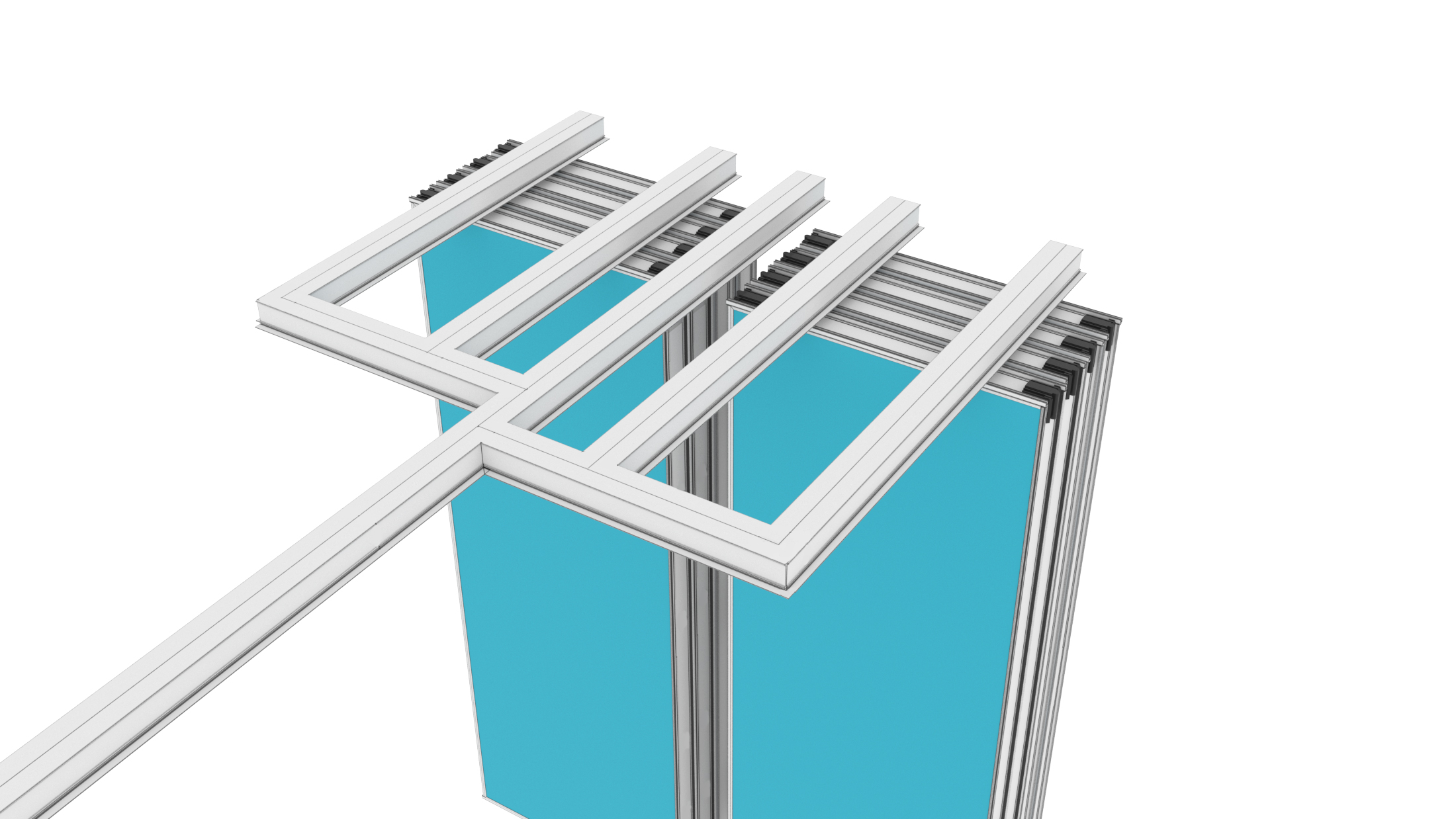
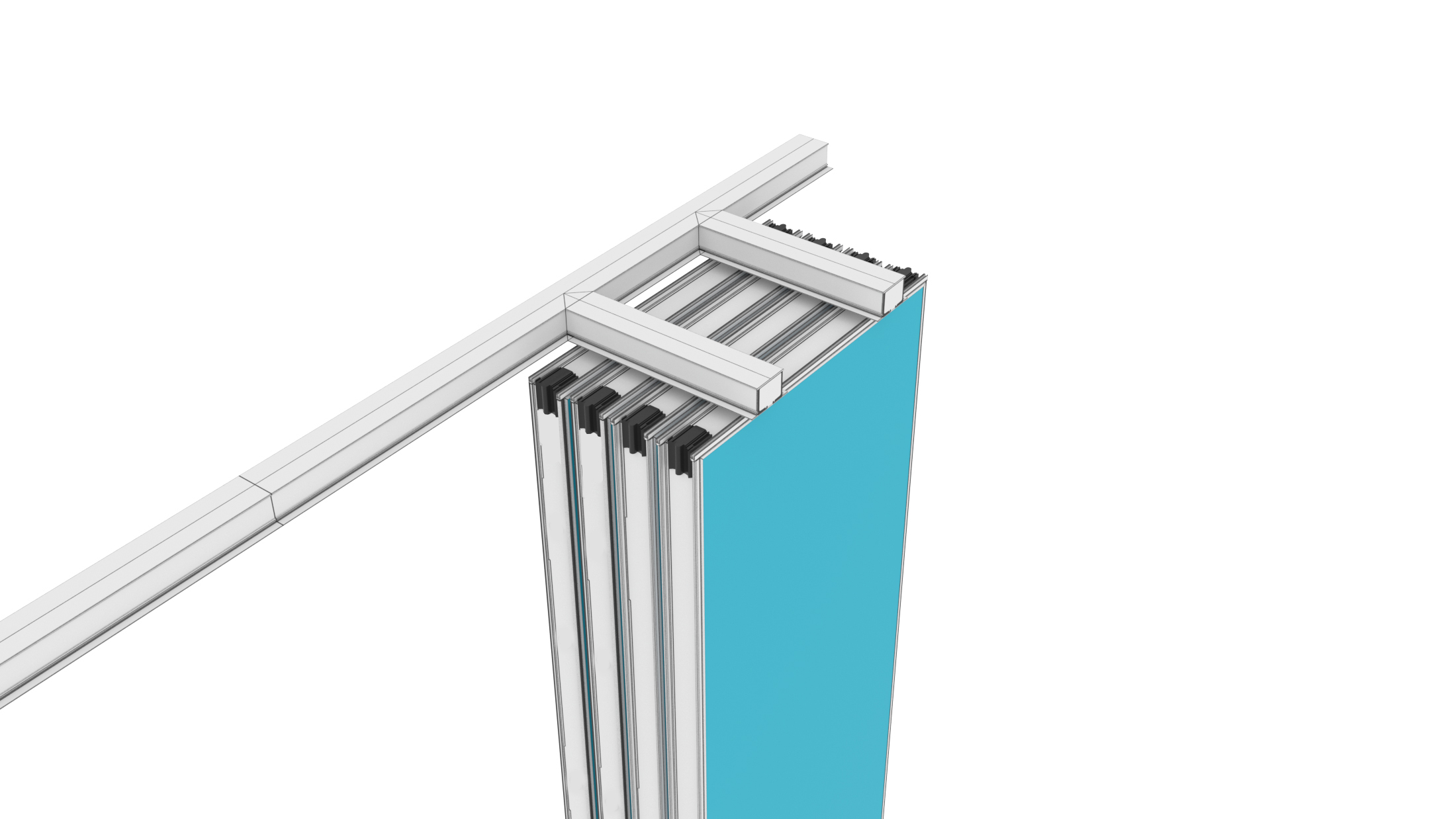
A hidden track system (in Finnish: piilotettu kisko, in Swedish: dold skena) integrates the load‑bearing mechanism within the structure above the ceiling line. The result is that no part of the track is visible when the partition is stationary or in motion.


How It Works


The sliding mechanism is installed inside a structural soffit, a dropped ceiling void, or a custom‑built enclosure. The movable panels are suspended from heavy‑duty trolleys that run inside a concealed aluminium or steel rail. Only a slender gap remains between the top edge of the panel and the ceiling – a gap that can be fitted with acoustic seals that retract automatically when the wall is moved.


Key engineering requirements:
 

  • – Structural preparation – The soffit must incorporate steel reinforcement or a robust timber frame capable of carrying the dynamic load of the moving panels. This is determined during the design phase, allowing seamless integration with the building’s MEP systems.
  • – Precision alignment – Because the track is hidden, alignment tolerances are tighter. Our installation teams use laser levelling to ensure that the panels run smoothly without any visible deflection.
  • – Acoustic integrity – The concealed track does not compromise sound insulation. On the contrary, the retractable perimeter seals, combined with a continuous header gasket, often achieve Rw values up to 51 dB or higher.


Advantages


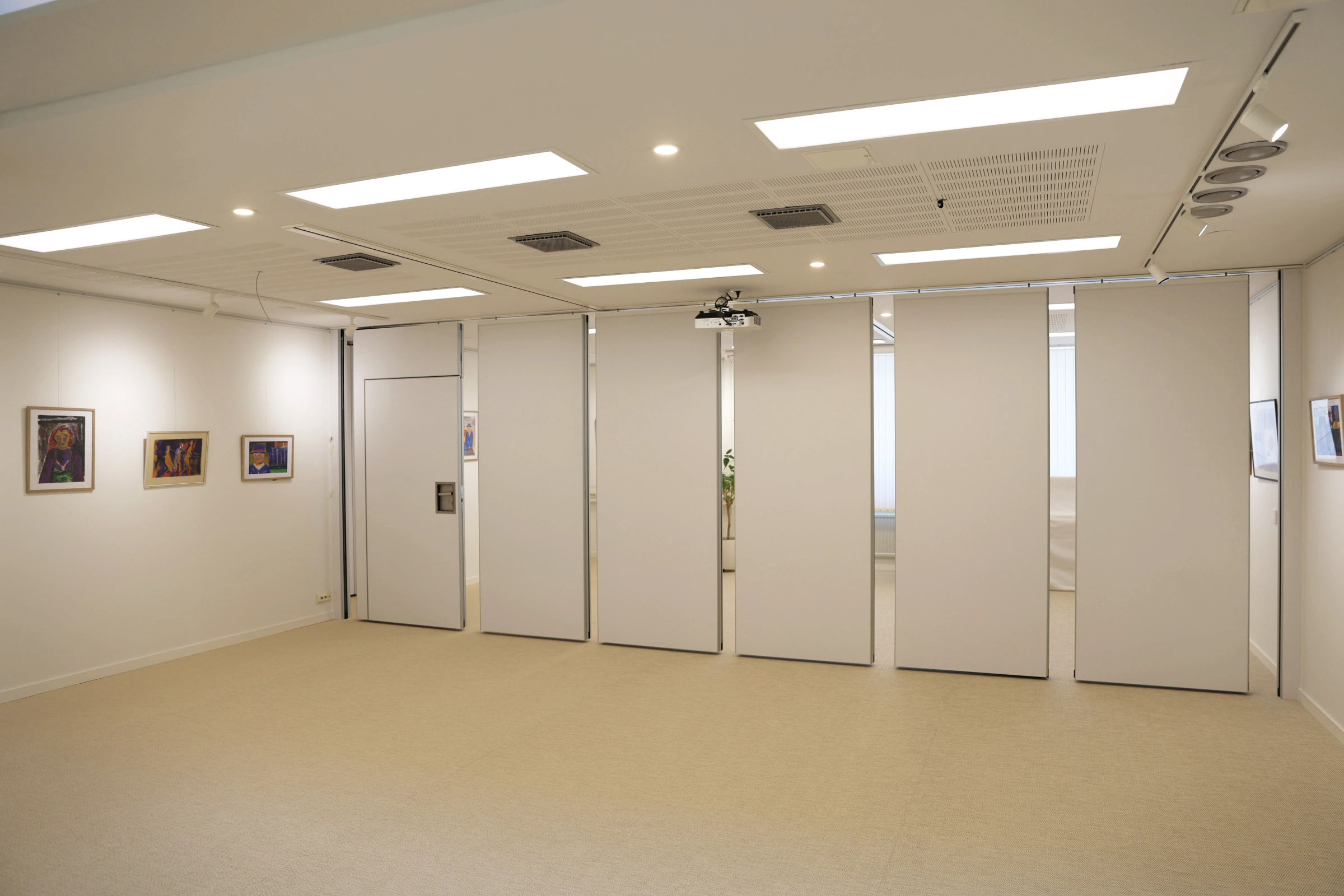
  • – Pure aesthetics – No visible hardware means the wall itself becomes a sculptural element. Glass panels appear to float, and solid wood finishes remain uninterrupted.
  • – Flexible ceiling design – Architects are free to use continuous lighting strips, acoustic baffles, or decorative ceilings without accommodating an obtrusive rail.
  • – Low maintenance – With no exposed track to collect dust, cleaning is simpler, and the moving parts are protected from accidental impacts.
image
image

3. Threshold Free Systems: Redefining Accessibility

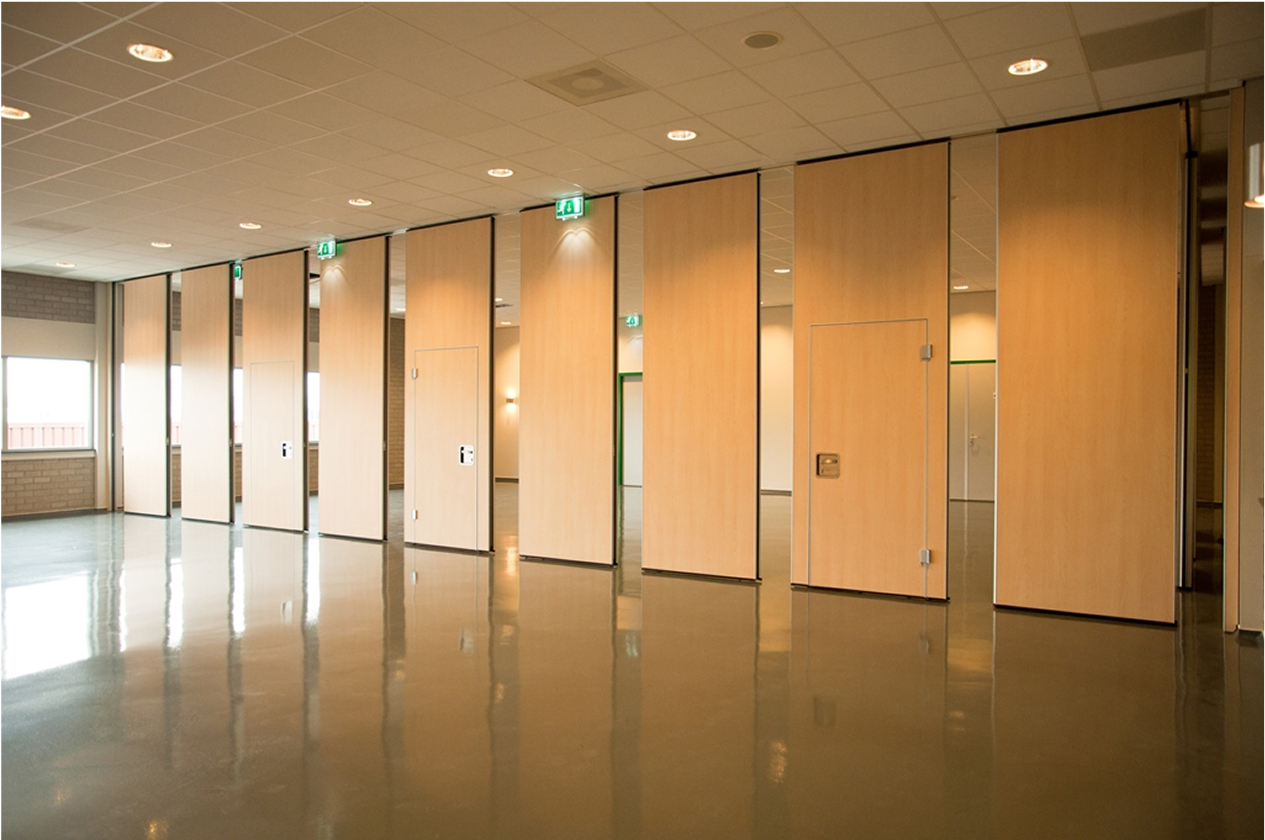
A threshold‑free (or floor‑track‑free) sliding partition eliminates the need for any guide on the finished floor. The panels are supported entirely from the top, and the lower edge is either free‑floating or equipped with a discreet brush or compressible seal that makes contact with the floor without creating a raised lip.


How It Works


The system relies on a top‑hung suspension with precision‑engineered trolleys. Vertical stability is maintained by:
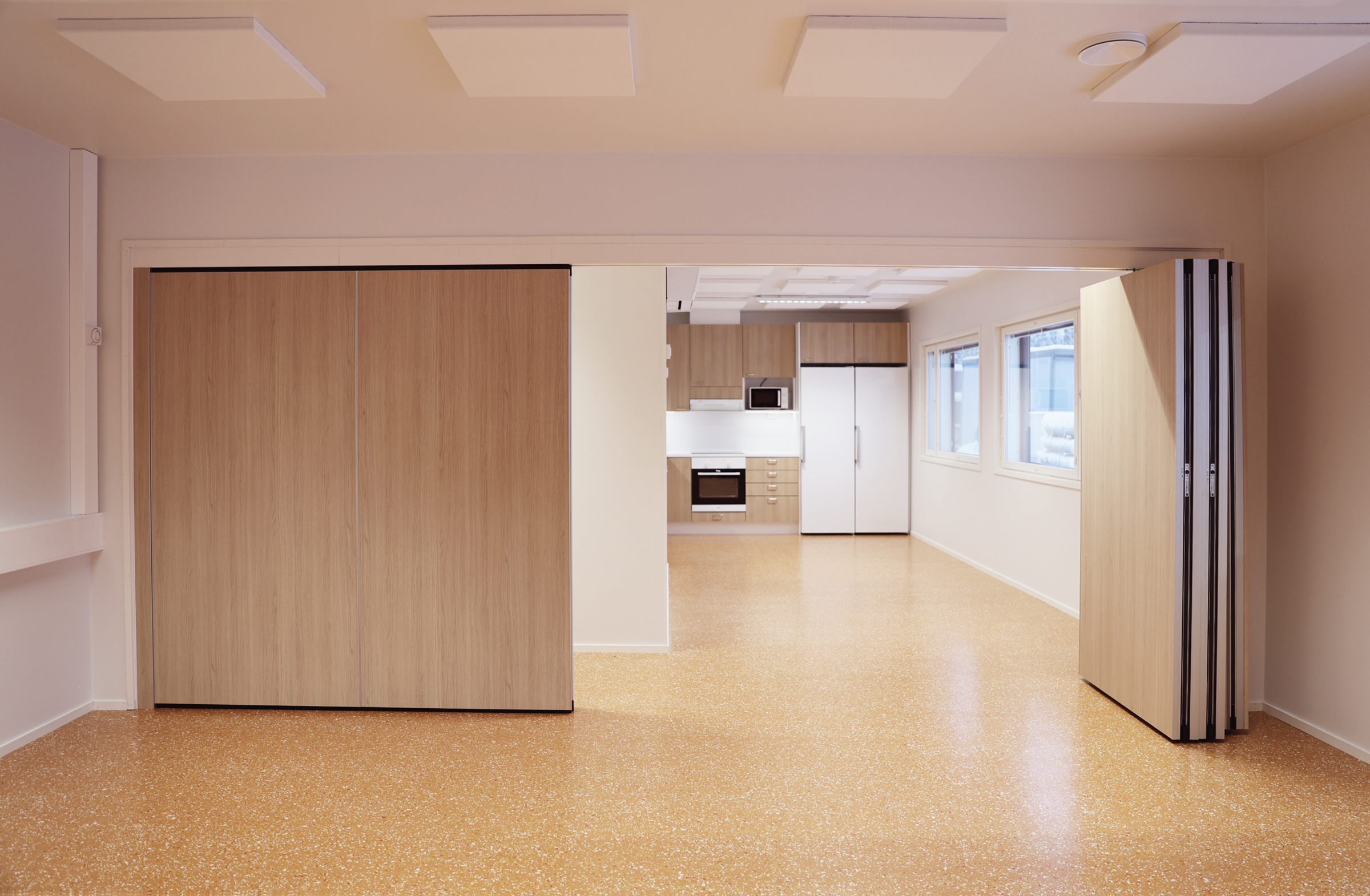
 

  • – Guiding profiles – In some designs, a narrow vertical guide is attached to the door leaf, engaging with a subtle floor channel that is flush with the surface (no threshold). Alternatively, advanced systems use magnetic or mechanical synchronisation to keep panels aligned without any floor contact.
  • – Automated drop seals – When the partition is deployed, a motorised or spring‑loaded seal lowers from the bottom of the panel to meet the floor, creating an acoustic and visual barrier. When retracted, the seal lifts completely, leaving the floor unobstructed.


Critical Benefits


  1. Universal accessibility (esteettömyys) – The absence of a threshold makes the space fully accessible to wheelchair users, people with walking aids, and anyone who would otherwise struggle with a change in level. This aligns with modern building codes and the principles of inclusive design.
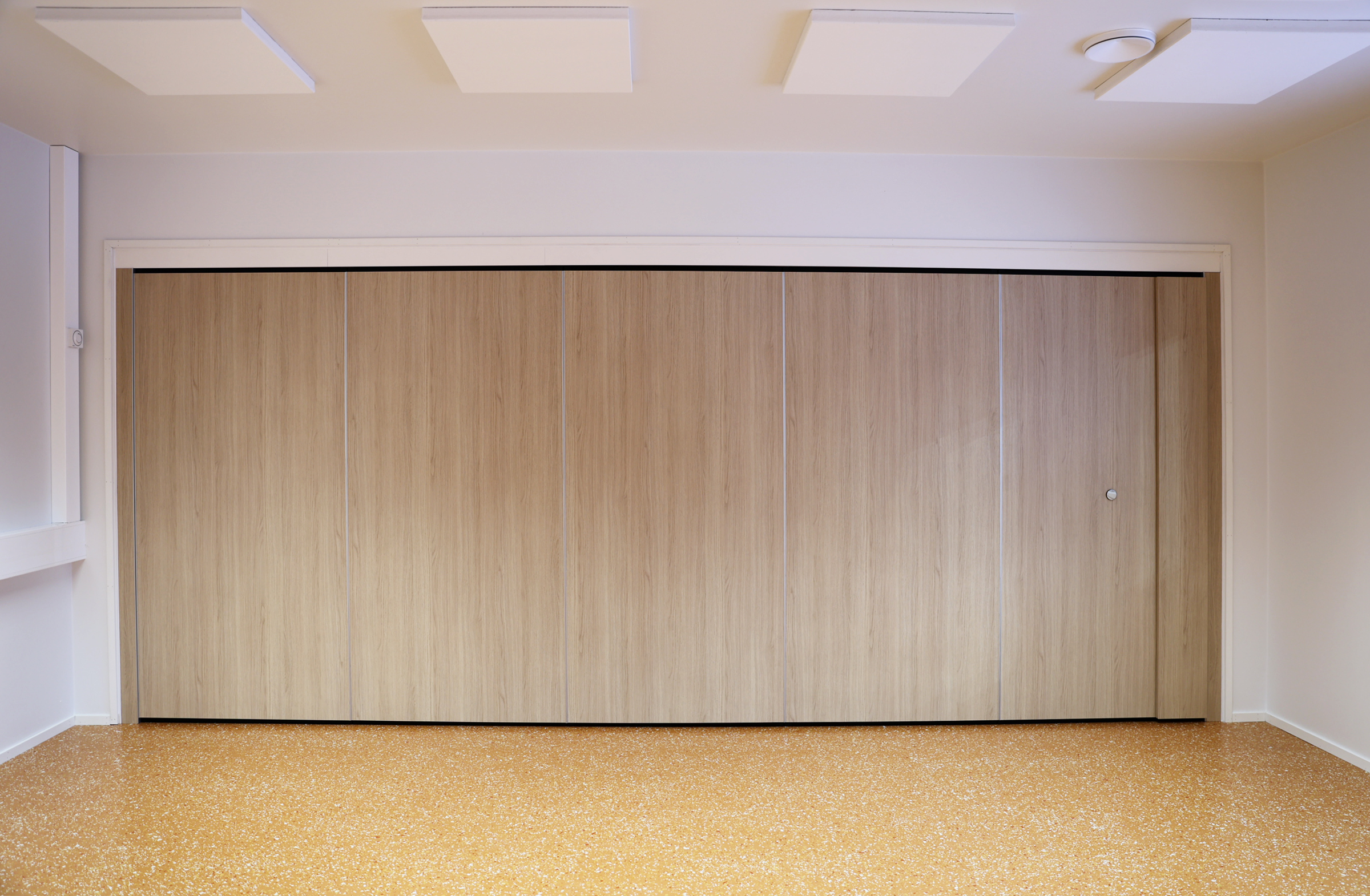
  2. Seamless flooring – Premium materials such as polished concrete, large‑format porcelain tiles, epoxy resin, or continuous carpet can flow uninterrupted across the entire area. There is no need to cut channels or install unsightly aluminium strips.
  3. Hygiene and maintenance – Floor‑cleaning robots, scrubber‑driers, and mops can pass freely under the partition when it is open. In healthcare and food preparation environments, eliminating the floor track removes a major area where dirt and bacteria can accumulate.
  4. Safety – With no protruding threshold, the risk of tripping is eliminated – a crucial factor in public buildings and spaces used by children or the elderly.
slide partition wall
foldable partitions

4. Combining Both Technologies: The Ultimate Solution

The most sophisticated projects today demand both a hidden track and a threshold‑free design. When combined, these technologies deliver:


  • – A completely clean visual – No visible hardware from ceiling to floor.
  • – Full barrier‑free compliance – The partition does not create any architectural obstacle.
  • – Superior acoustics – Advanced perimeter seals maintain high sound insulation despite the absence of a bottom track.


This combination is particularly sought after in:
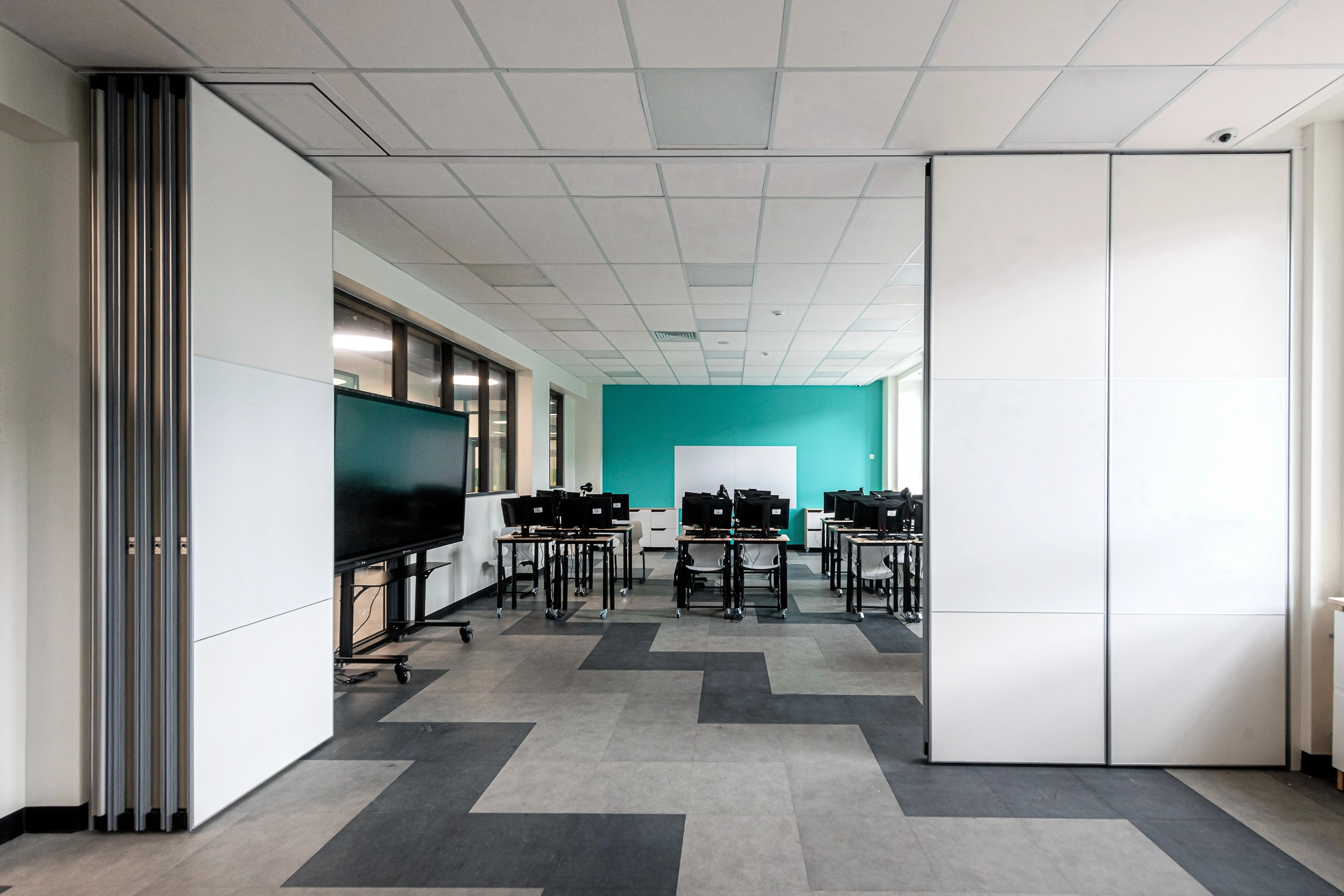
 

  • – Executive offices and boardrooms – Where design elegance and seamless transitions are paramount.
  • – Medical and dental clinics – Where hygiene, accessibility, and quiet zones are critical.
  • – Hotel ballrooms and conference centres – Where flexible spaces must be easily reconfigured without damaging high‑value flooring.
  • – Luxury residential – For open‑plan apartments where floor continuity is a key design feature.
wall panels
folding separation walls

5. Practical Considerations for Specification

When specifying a hidden‑track, threshold‑free system, keep the following in mind:
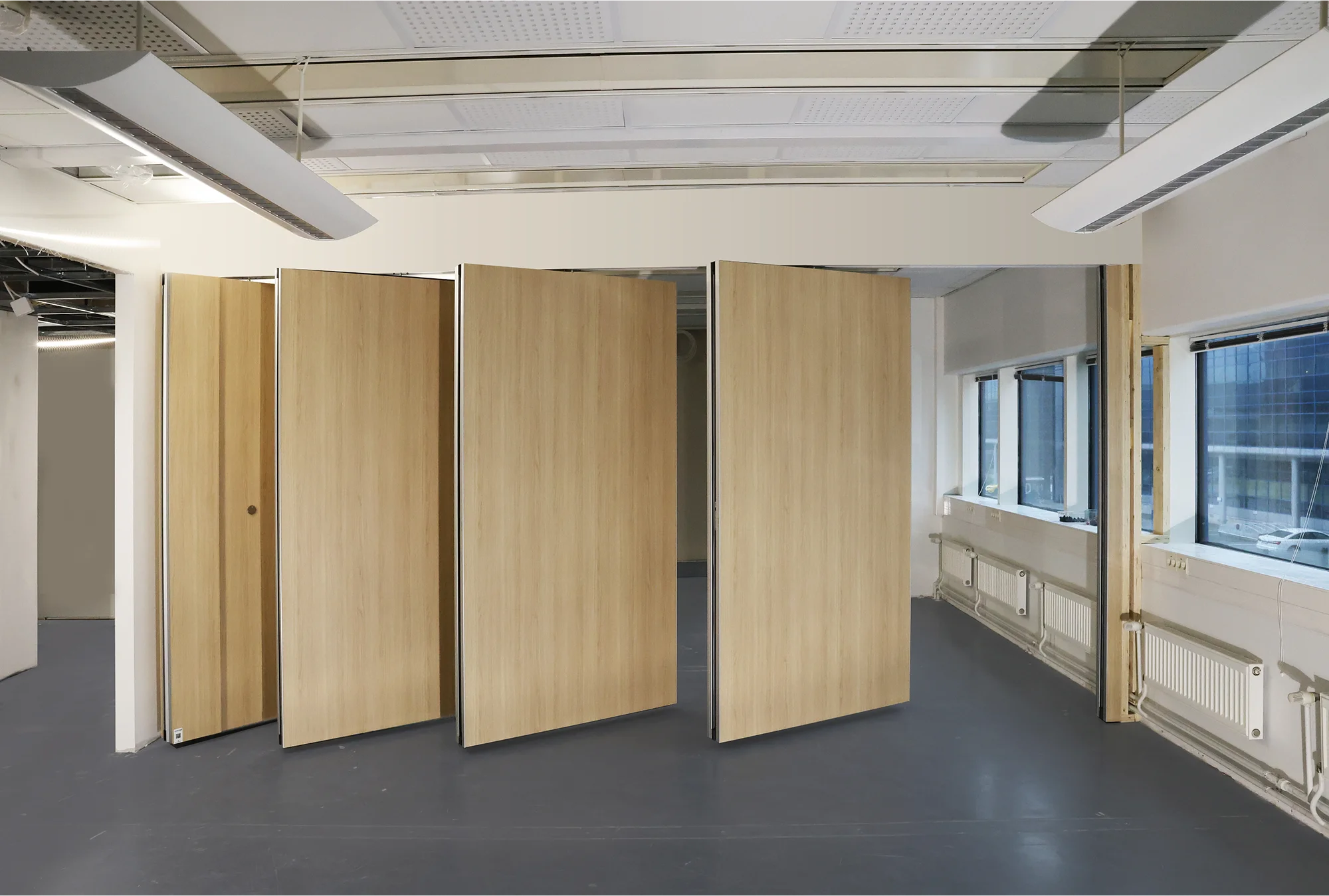
 

  • – Early integration – The structural soffit and reinforcement must be coordinated with the building’s structural engineer. Engaging Scandic Wall during the design development phase ensures that all requirements are captured in the construction drawings.
  • – Panel weight and dimensions – Top‑hung systems can accommodate panels up to 3–4 metres in height and significant widths, but the track and trolleys must be sized accordingly. Our engineering team calculates load capacities and provides detailed shop drawings.
  • – Acoustic rating – If a high Rw value is required (e.g., 50 dB+), we incorporate automated acoustic seals that engage only when the wall is closed, preserving the clean aesthetic during operation.
  • – Operation type – These systems can be manual (with ergonomic handles) or motorised. For hidden‑track configurations, motorisation is often preferred because the drive mechanism is concealed within the soffit, further enhancing the minimalist look.
sliding partition walls
sliding wall system

6. Case in Point: A Recent Installation

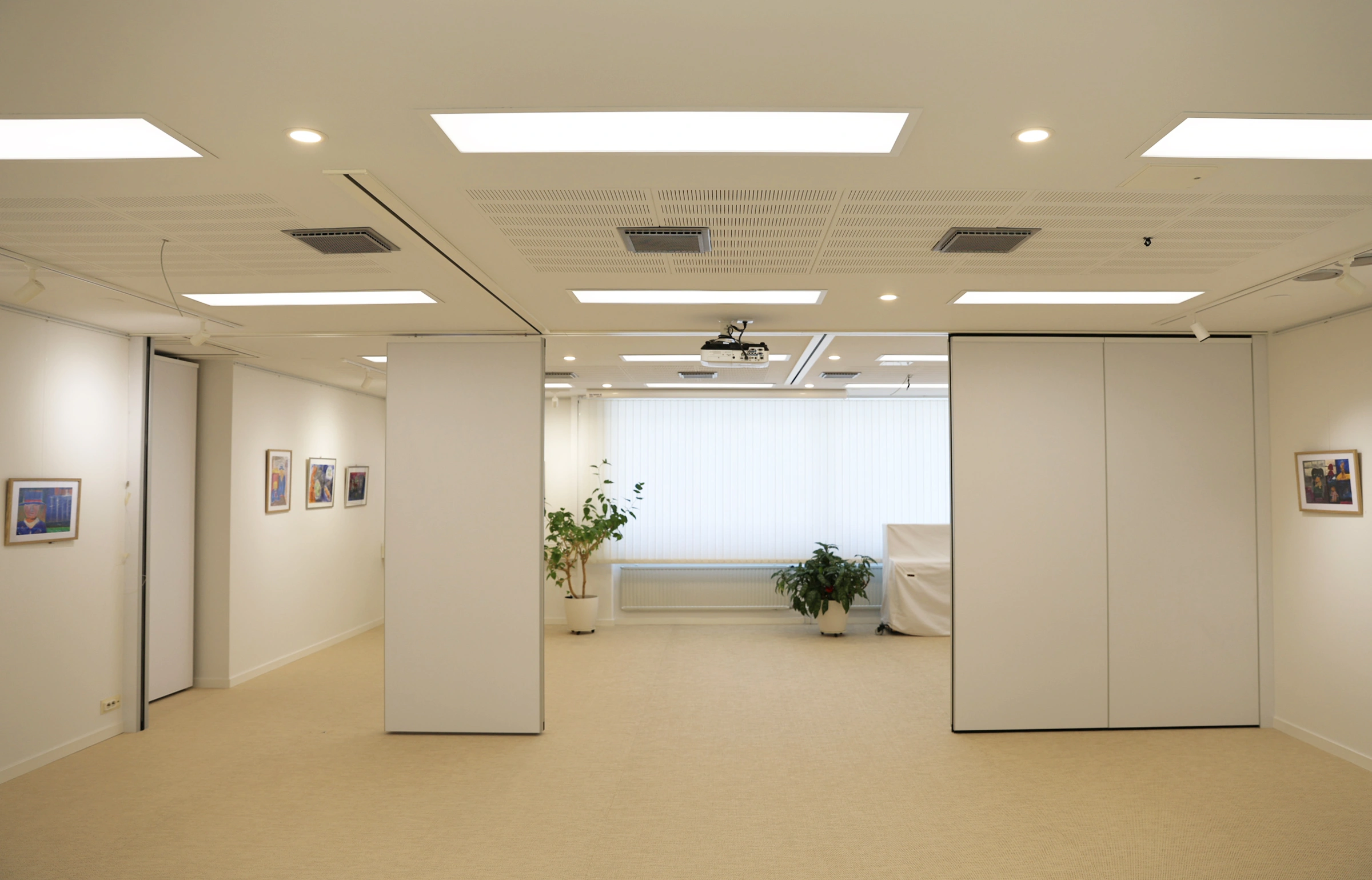
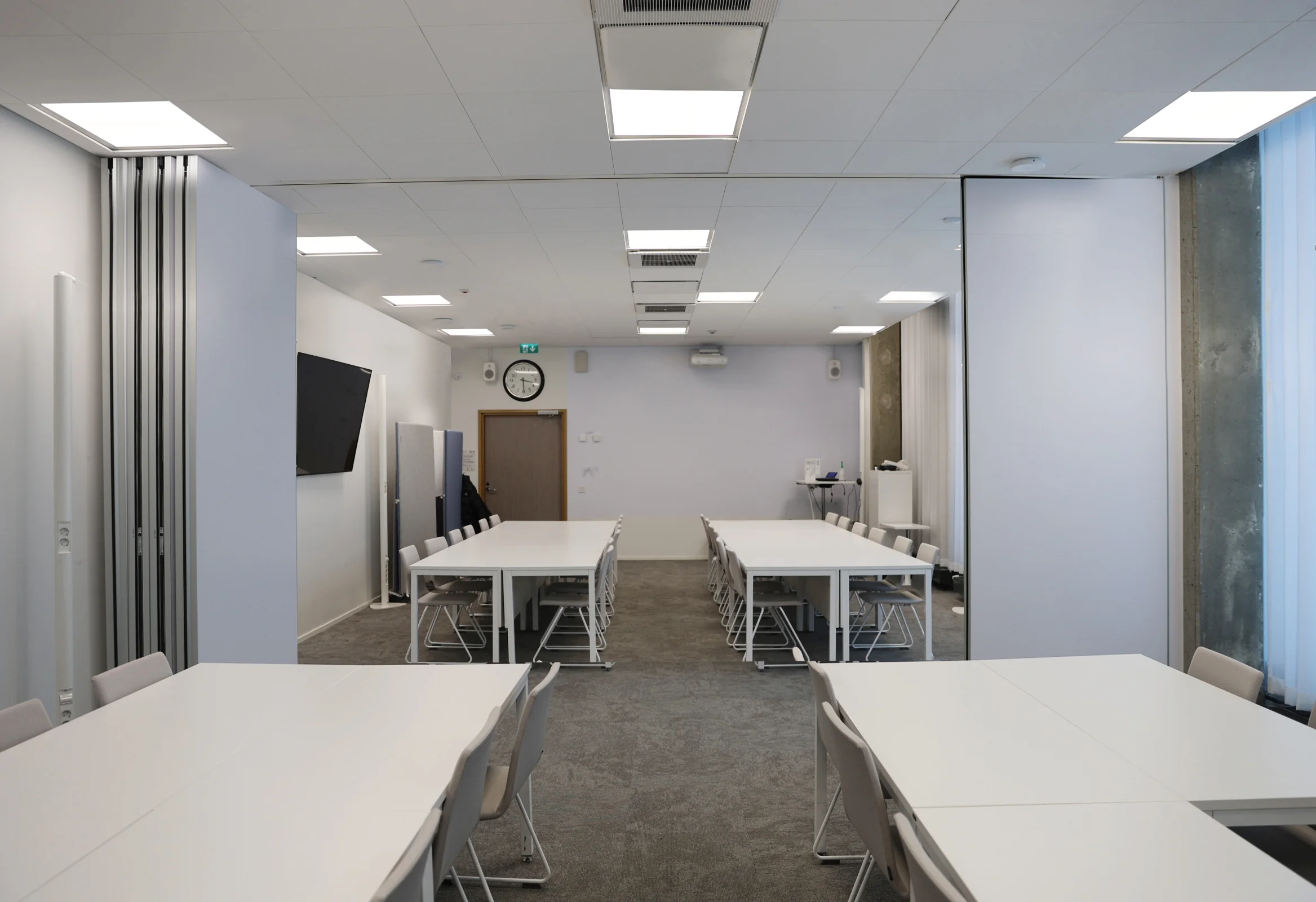
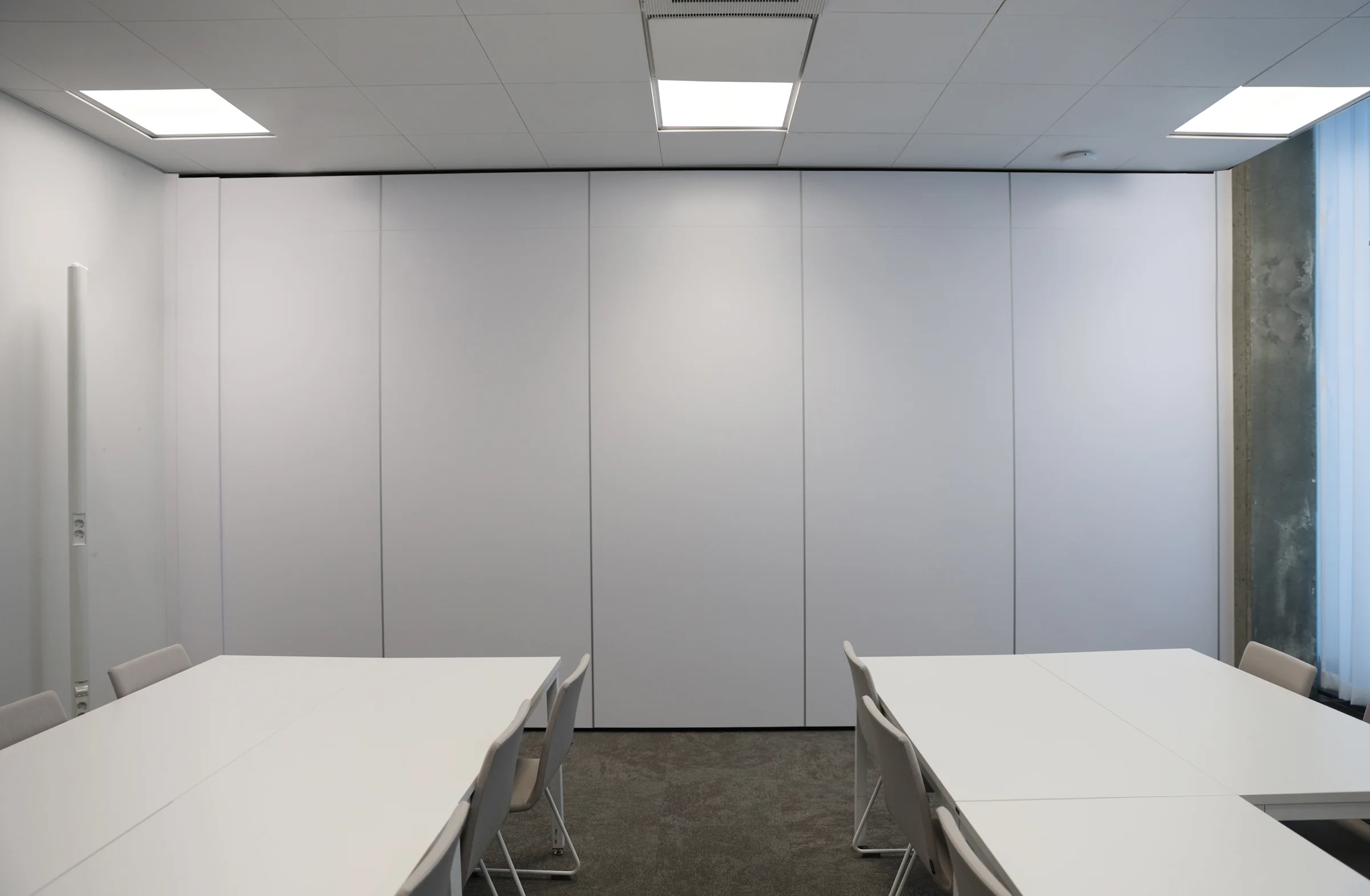
In a recent project for an office in Espoo, Finland, we installed a 3‑metre‑high movable partition using exactly these principles. The client wanted to divide a large open‑plan area into two independent departments while maintaining a sleek, modern look and ensuring that the space remained fully accessible. We designed a concealed top‑hung system with a flush ceiling integration and a threshold‑free floor transition. The result: an acoustic partition (Rw 51 dB) that appears to float effortlessly, with no visible tracks or thresholds. The flooring – a continuous polished concrete surface – remained uninterrupted, and the space now meets the highest standards of accessibility.


You can view the project details in our portfolio: High sliding wall OPTIMAL in an office space in Espoo.
liukuvat väliseinät toimistoon
sliding partitions

As the demand for flexible, beautiful, and inclusive spaces grows, so does the need for sliding partitions that disappear into the architecture. Hidden tracks and threshold‑free systems are no longer niche innovations; they are becoming essential tools for architects who refuse to compromise on design integrity or accessibility.


By integrating these technologies early in the design process, you can achieve:


  • Uninterrupted material flows
  • Barrier‑free environments that welcome everyone
  • Clean aesthetics that elevate the entire space


At Scandic Wall, we specialise in engineering these solutions from concept to installation. Whether you are planning a corporate headquarters, a healthcare facility, or a multifunctional venue, we are ready to support your project with technical expertise and proven craftsmanship.

Ready to explore hidden‑track, threshold‑free sliding partitions? Contact our team to discuss your next project.

Download our drawings right now!

Our company offers the opportunity to get acquainted with the drawings of our products️️

Select download format img