call me back
Have a project in mind? Fill out the form below and we`ll get back with you as soon as we have the chance
12/02/2026
Movable walls have evolved from simple room dividers to sophisticated architectural systems. They are key tools for creating flexible, multi-functional environments. However, the success of a project hinges not just on choosing *a* wall, but on selecting the right system and integrating it seamlessly with the building’s structure, design, and technology.
This article explores the technical nuances of specifying movable walls for different sectors and answers critical questions about design integration and automation.
The demands on a movable wall in a quiet corporate office are vastly different from those in a bustling school corridor or a reverberant concert hall. Here’s how requirements shift across different building types:
Focus: Speech privacy (STC 45-50+). Walls must block confidential conversations between meeting rooms and create quiet focus areas from open-plan spaces.
Example: A law firm needs to quickly subdivide a large training room into two private client meeting rooms. The priority is high STC ratings and a seamless, professional finish.
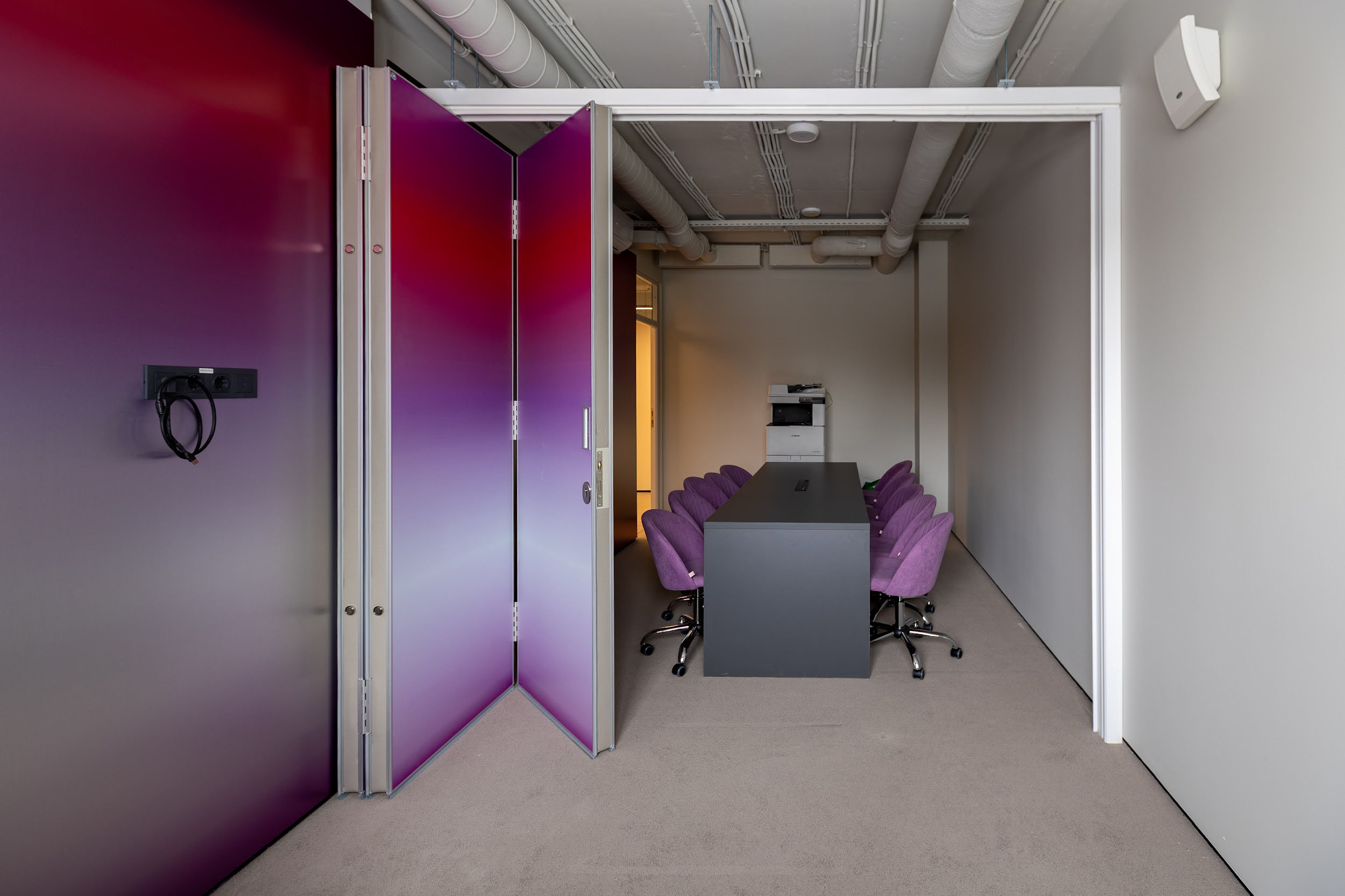
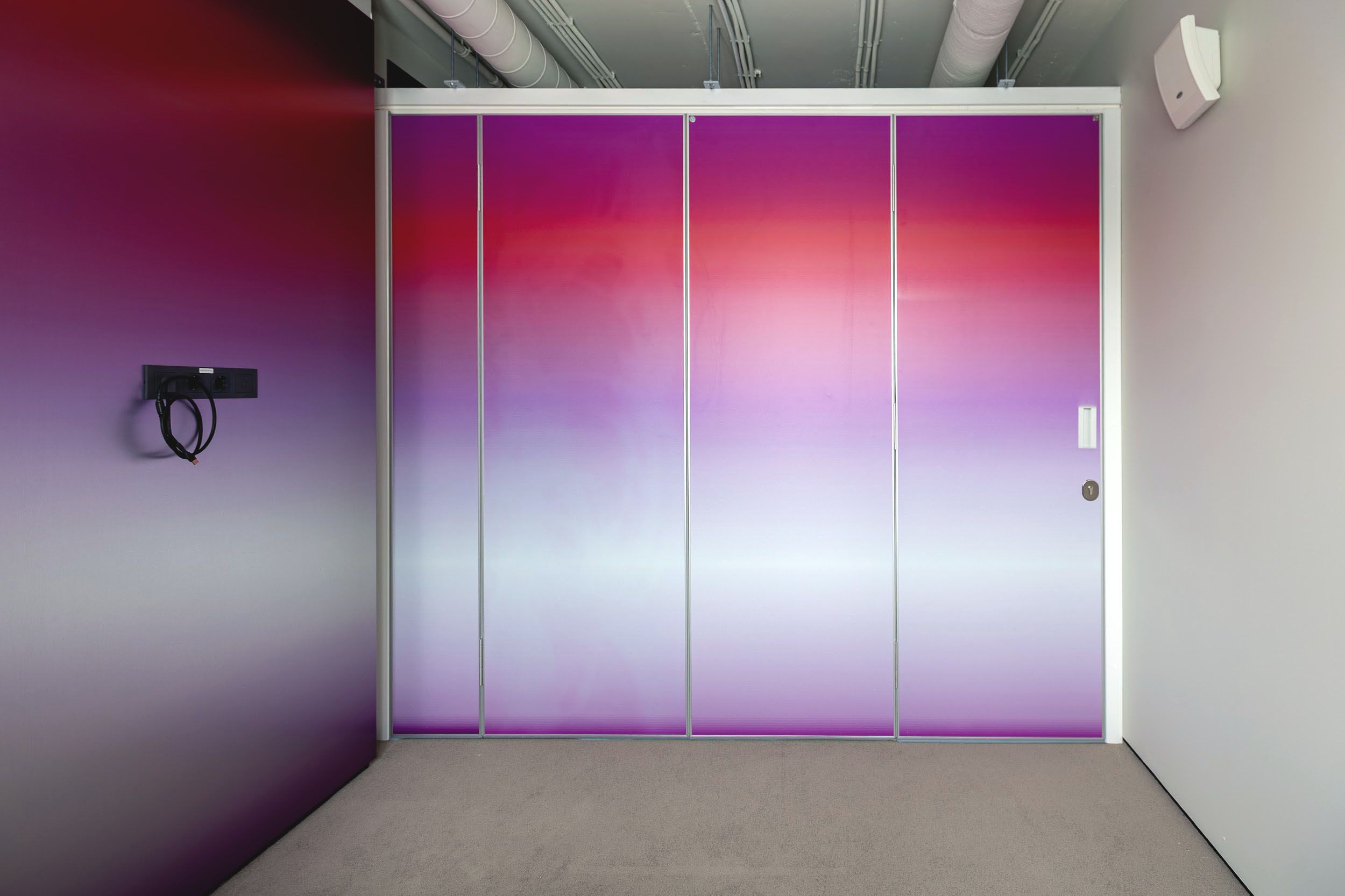
Focus: Resistance to high traffic and impact. Systems often need to be moved multiple times a day by teachers or staff.
Example: A school gymnasium (like the Solvikin Daycare project on our blog) uses a durable, manually operated wall to create separate spaces for different age groups. Ease of use and safety are paramount.
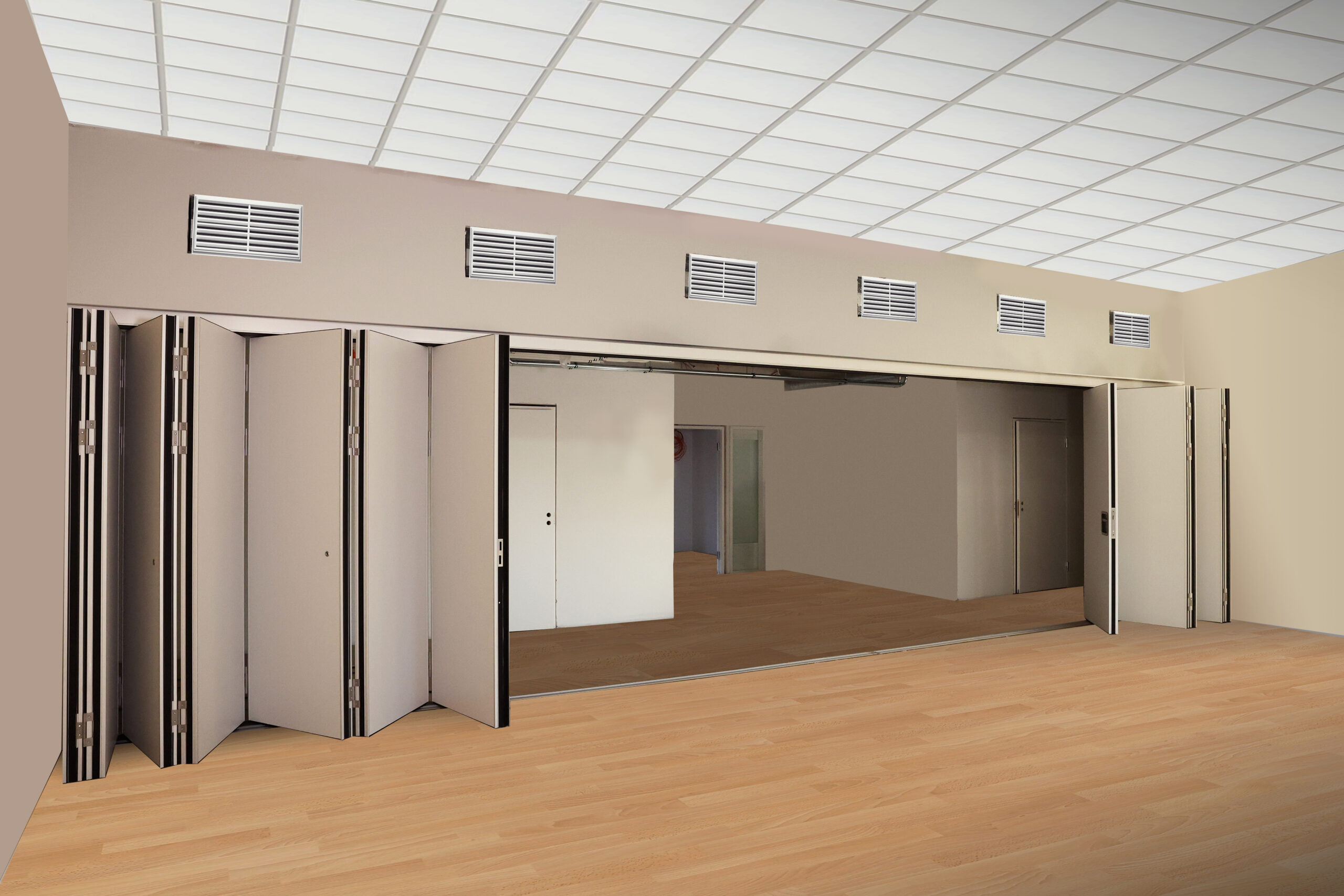
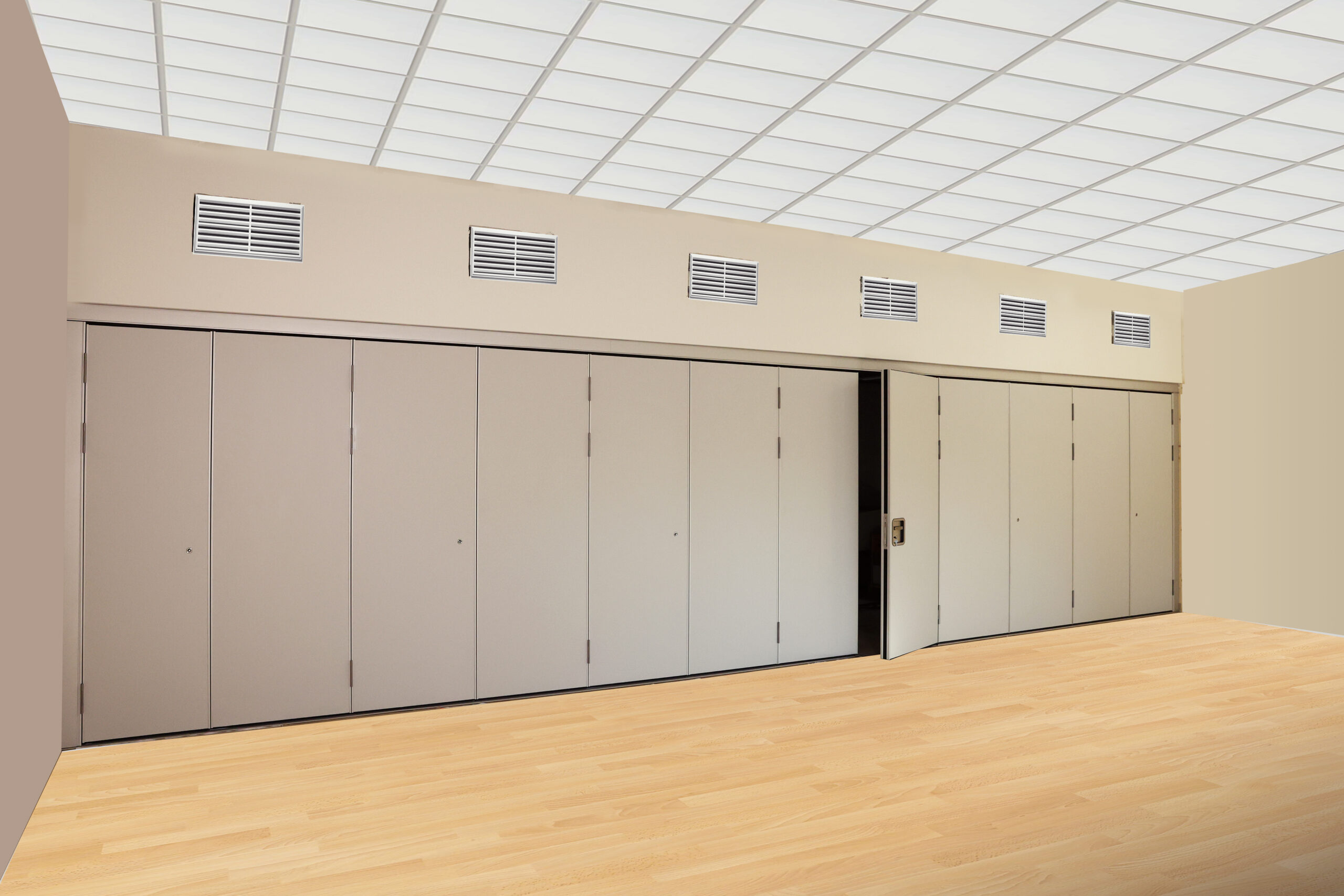
Focus: Smooth, non-porous surfaces that can withstand frequent cleaning with harsh disinfectants. Hardware must be designed to avoid dirt traps.
Example: A clinic’s transformable entrance area or a multi-purpose patient room needs walls that can be sanitized quickly to maintain a sterile environment between uses.
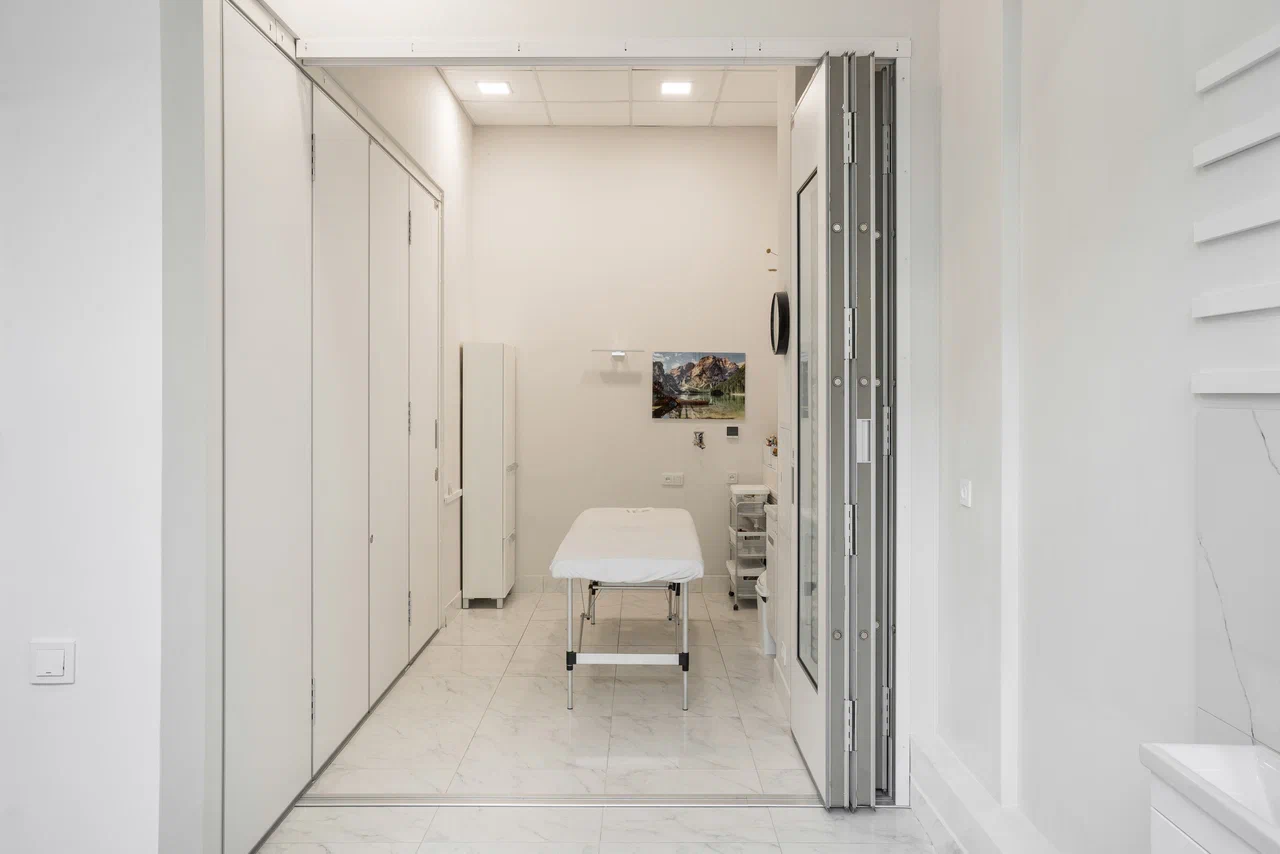
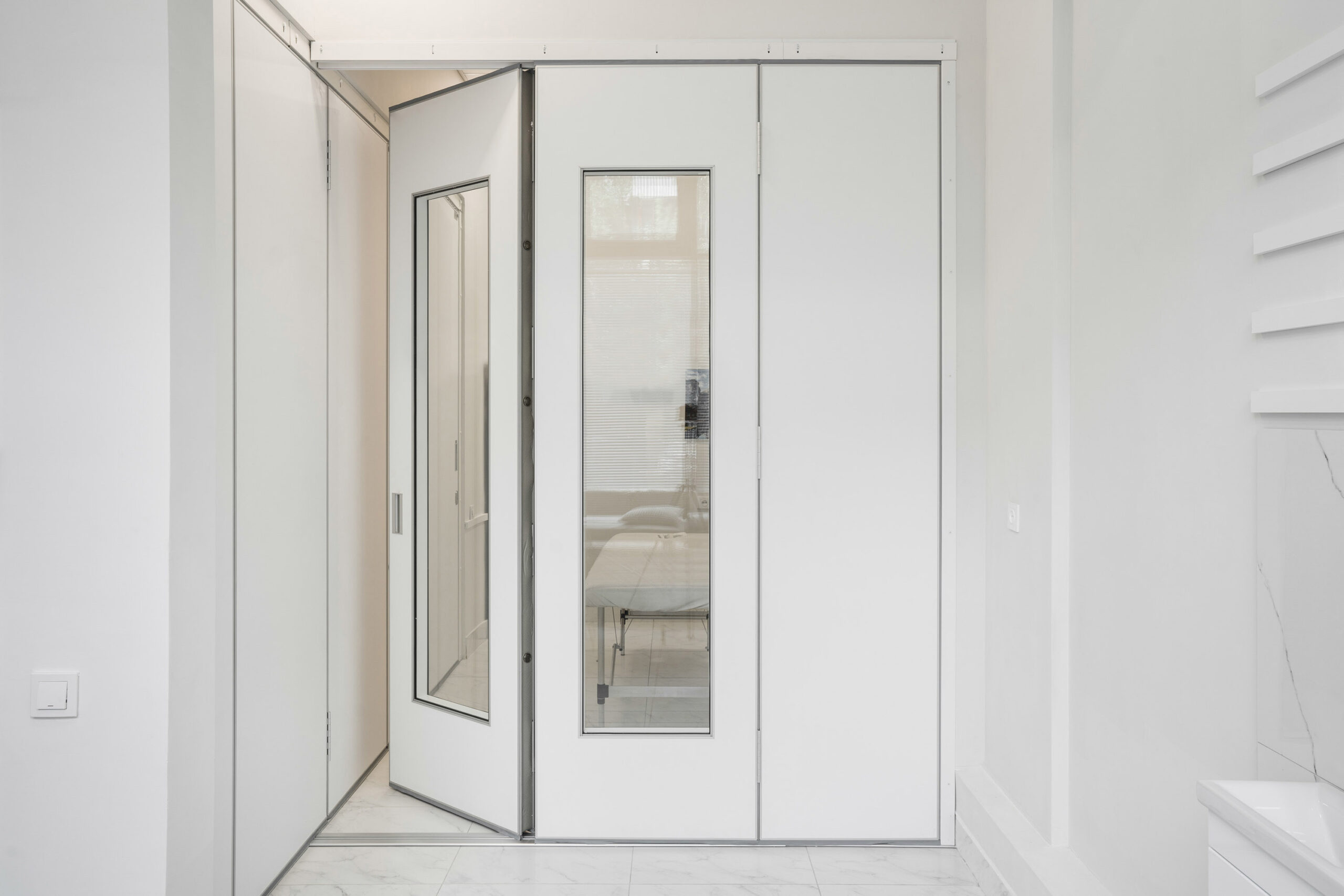
Focus: Very high sound insulation (STC 50+), often requiring continuous acoustic seals and heavy, mass-loaded panels. The goal is to create acoustically independent spaces.
Example: A state-of-the-art exhibition complex, like the one featured in your blog, requires walls that can instantly convert a massive hall into smaller, acoustically isolated seminar rooms without sound bleed between them.
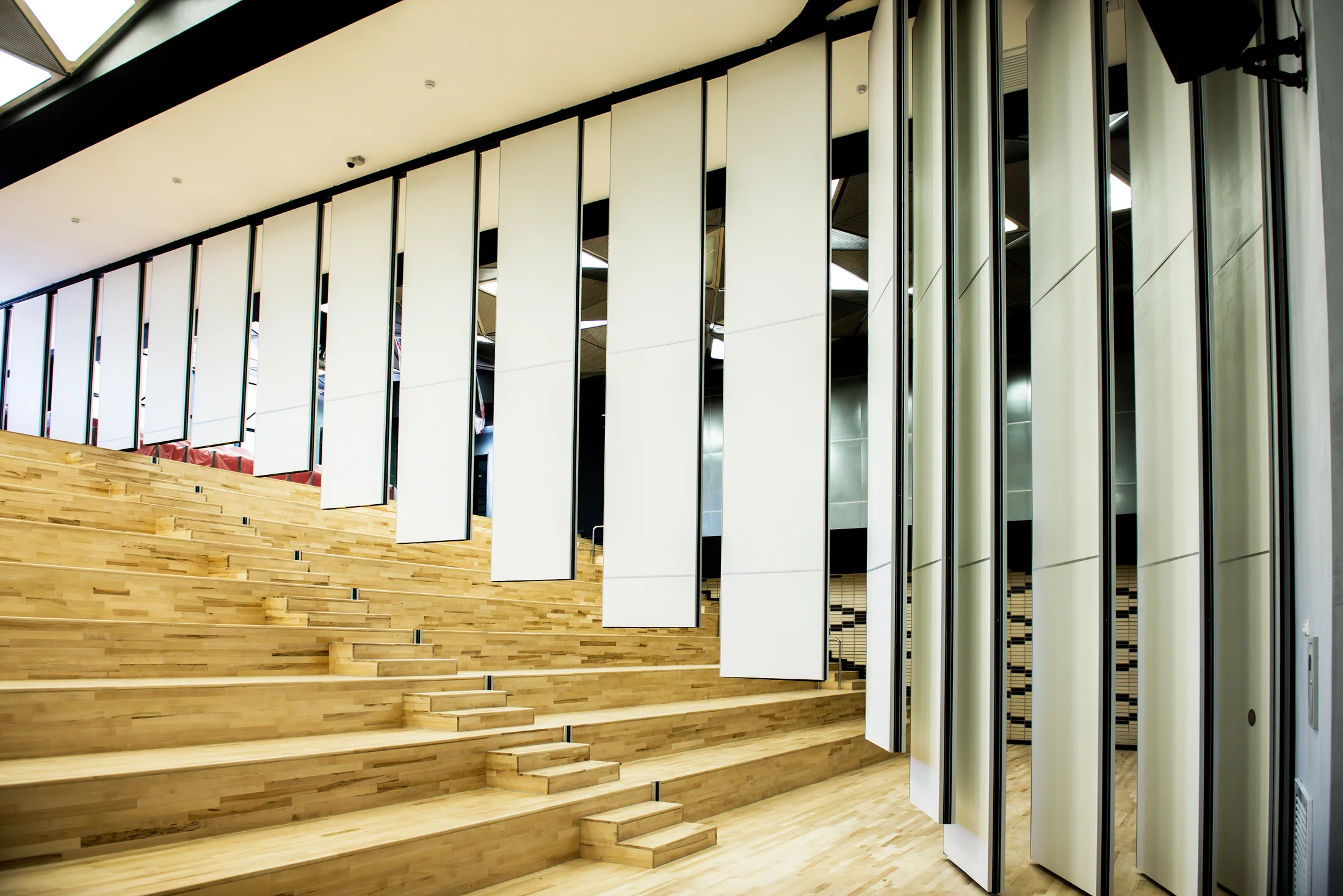
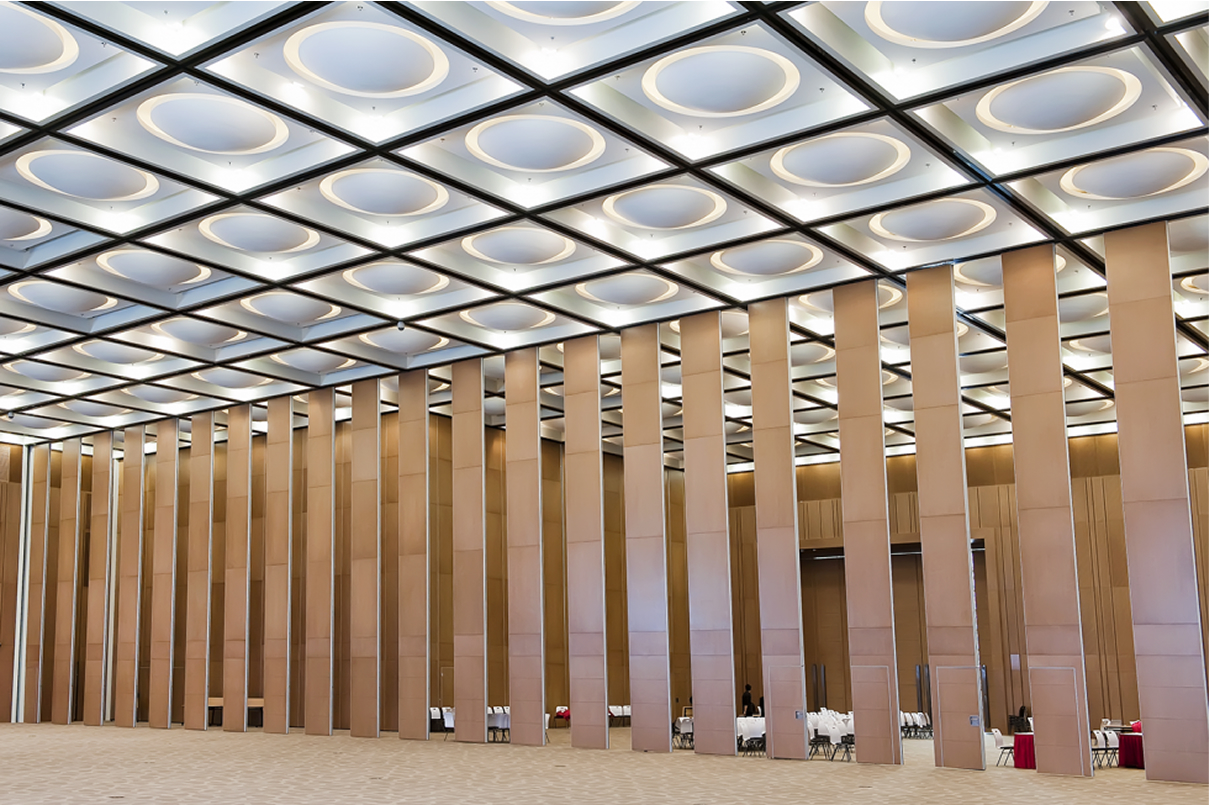
Focus: Premium finishes (wood veneers, fabric, glass) that complement the interior design. The mechanism should be nearly invisible to maintain the ambiance.
Example: A hotel banquet hall uses a high-end glass movable wall to divide the space, allowing natural light to penetrate both sides while offering the flexibility to create smaller, intimate event spaces in the evening.

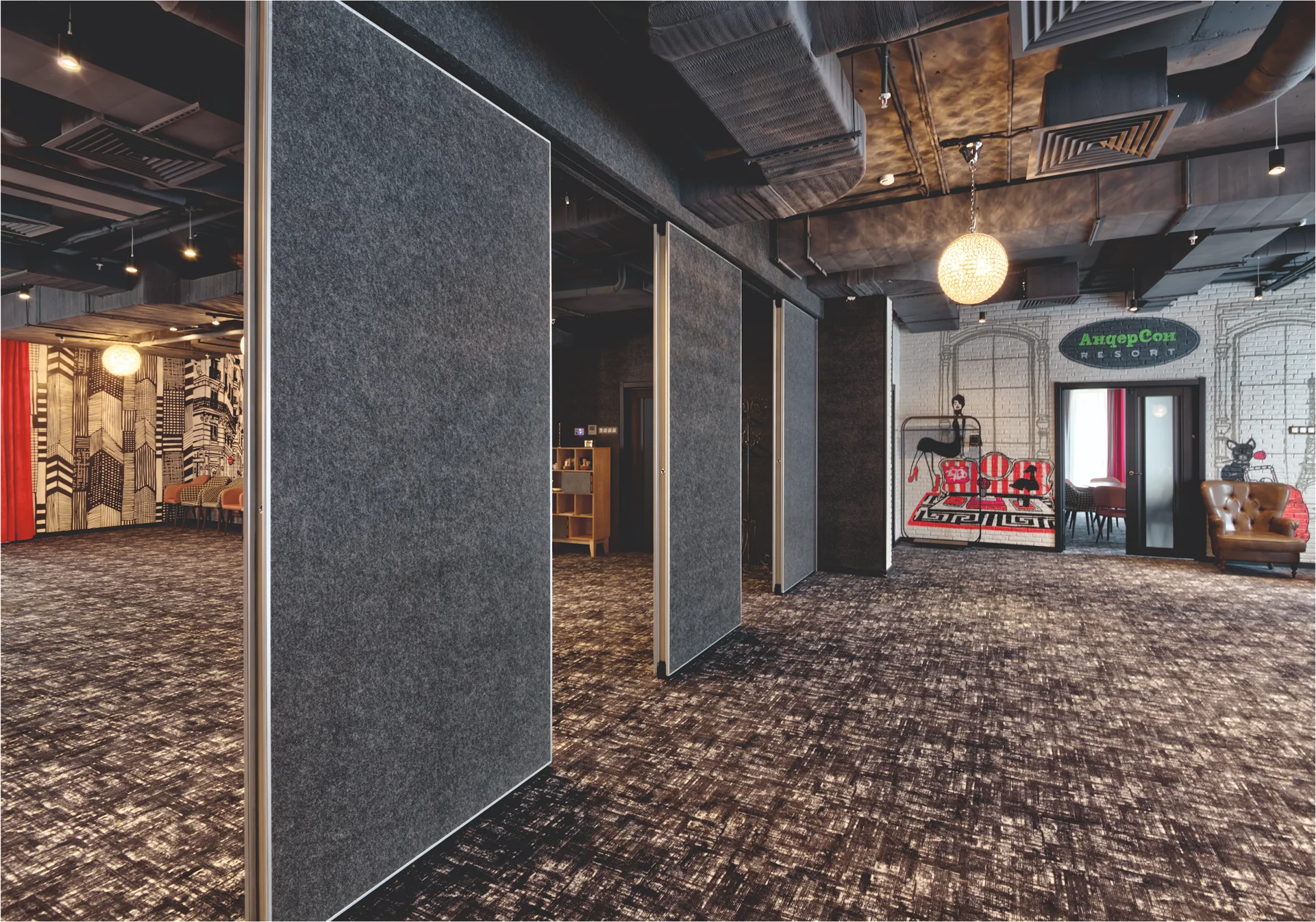
Focus: Large-scale, heavy systems that can be moved quickly, often electrically. They must withstand crowds and potential impacts.
Example: A convention center needs a robust system to partition a vast exhibition floor, with the ability to create different hall configurations overnight for back-to-back events.
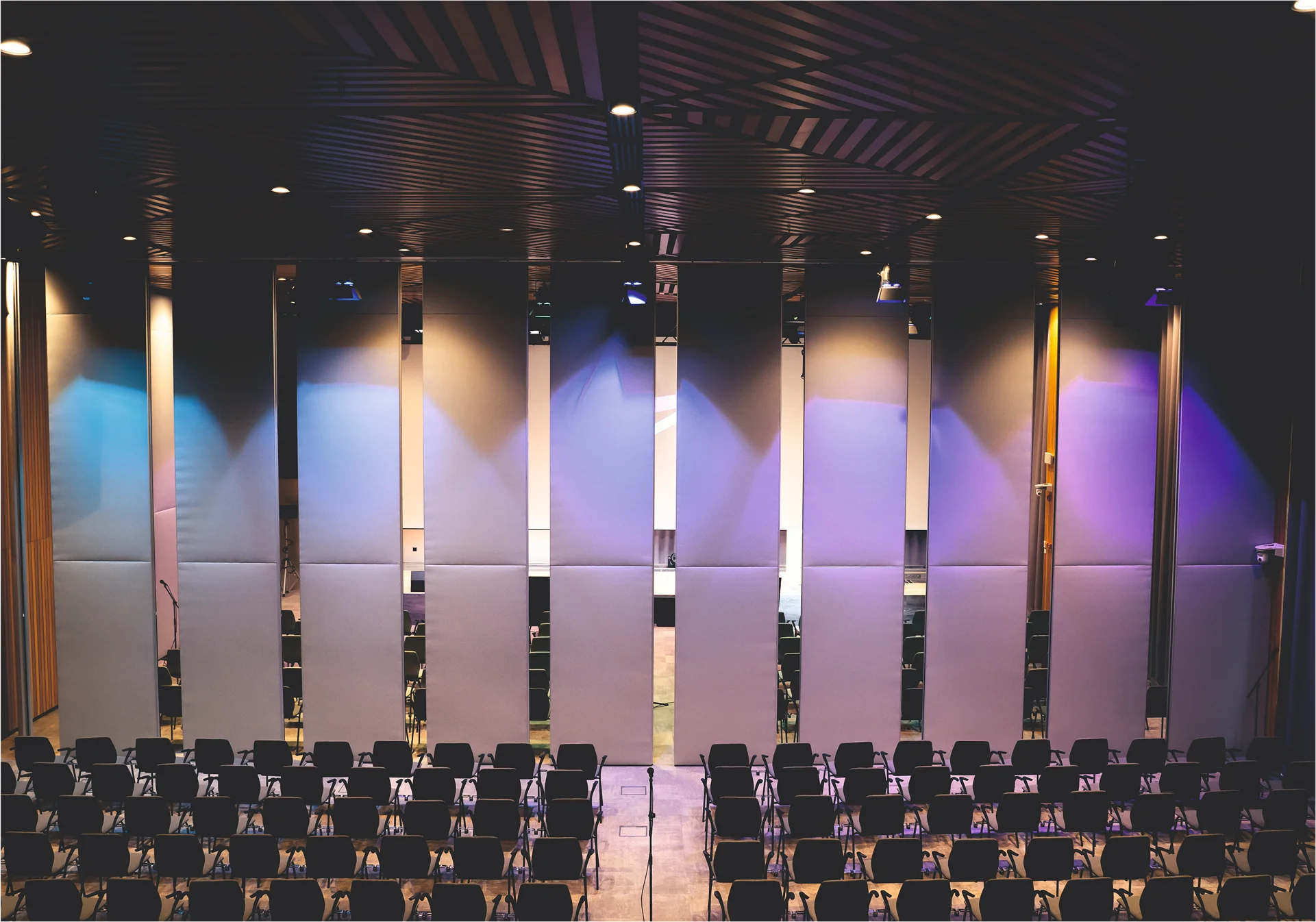
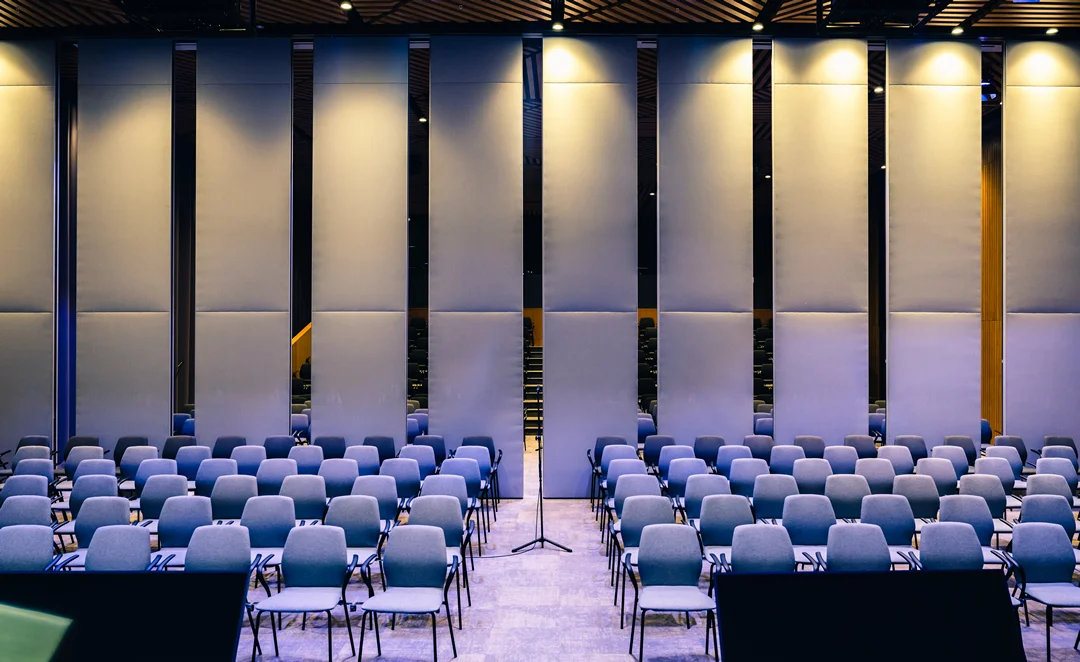
One of the most common client questions is: “How do we make sure the movable wall looks like it belongs, not like an afterthought?” Successful integration is a blend of early planning and smart design choices.
1 Early Collaboration is Key: Involve the movable wall specialist before the interior design is finalized. This allows the architect to design the storage pocket, ceiling track housing, and structural supports into the plans from the start, avoiding awkward bulkheads or visible tracks that disrupt the visual flow.
2 Finish Matching: Modern movable walls are a blank canvas. Panels can be clad in virtually any material:
Paint: Match the exact wall color to make the partition disappear when closed.
Wood Veneers: Seamlessly continue a feature wall’s wooden slats or panels across the movable wall.
Fabric/Wallpaper: Upholster panels in the same fabric as surrounding acoustic panels or apply matching wallpaper.
Glass: Use full-height glass partitions with matching mullions to maintain an open, light-filled aesthetic even when divided.
3 Disappearing Acts:
Flush Finishes: Design the wall so that when it’s deployed, the panels sit perfectly flush with the adjacent fixed walls, with only fine lines revealing the seams.
Hidden Storage: When not in use, the stack of panels should disappear into a dedicated, architecturally finished pocket that looks like a solid wall or an integrated part of the joinery.
4 Floor and Ceiling Transitions: The track system itself can be integrated. Floor tracks can be fitted with removable covers that match the flooring material. Ceiling tracks can be hidden behind a continuous slot in a suspended ceiling, making them virtually invisible.
The choice between manual and automatic (motorized) operation impacts user experience, cost, and long-term usability. The decision should be based on the frequency of use, panel size/weight, and the user’s physical capabilities.
1 How they work: Operated by a handle, lever, or simple push-pull mechanism. Heavier systems often use a “lift and seal” mechanism where turning a handle lifts the panel slightly off the floor and compresses it against the perimeter seals for acoustic tightness.
2 Best for:
Infrequent use (e.g., a divisible banquet hall used a few times a week).
Smaller, lighter panels.
Applications where simplicity and low maintenance are critical (e.g., schools).
Projects with tighter budgets.
3 Pros: Lower initial cost, no electrical infrastructure needed at the track, simple to maintain, reliable.
1 How they work: Electric motors drive the movement and sealing of the panels, controlled by buttons, keypads, or even building management systems (BMS).
2 Best for:
Very frequent use (multiple times a day).
Large, heavy, or complex configurations (e.g., stacking multiple panels in a convention center).
Projects requiring integration with BMS for scheduled space changes.
Spaces where ease of use is paramount (e.g., a high-end corporate HQ).
3 Pros: Effortless operation, can be integrated with access control, allows for complex configurations, ideal for inaccessible storage pockets.
4 Cons: Higher initial cost, requires electrical supply along the track, more complex installation and potential maintenance.
1 Choose Manual if: The budget is limited, usage is occasional, users are capable of operating a handle, and simplicity is valued over push-button convenience.
2 Choose Automatic if: The panels are large and heavy, the space is reconfigured frequently throughout the day, the client desires a premium, high-tech experience, or the system needs to integrate with a central building automation system.
Specifying a movable wall is a multidisciplinary exercise. It requires balancing acoustic physics with aesthetic vision, and mechanical reliability with electronic convenience. By carefully considering the specific demands of the space—be it a sterile clinic, a noisy school, or a high-tech office—and planning the integration from the earliest design stages, you can unlock the full potential of transformable architecture. The right wall doesn’t just divide a room; it multiplies the possibilities of your space.
Get weekly update about our product on your email, no spam guaranteed we promise ✌️
Our company offers the opportunity to get acquainted with the drawings of our products️️
Select download format