call me back
Have a project in mind? Fill out the form below and we`ll get back with you as soon as we have the chance
20/11/2025
Modern healthcare faces unprecedented demands for operational efficiency and sanitary safety. Traditional design, which relies on permanent walls, is incapable of providing the instant adaptability required by clinics and hospitals to respond to changing epidemiological situations or patient influx.
Transformable and movable partitions are not just a design element; they are a strategic tool for managing space, patient flow, and infection risks. The primary requirements for these systems in a medical environment are not aesthetic but rather functional reliability, sanitary compatibility, and high-level acoustic insulation.
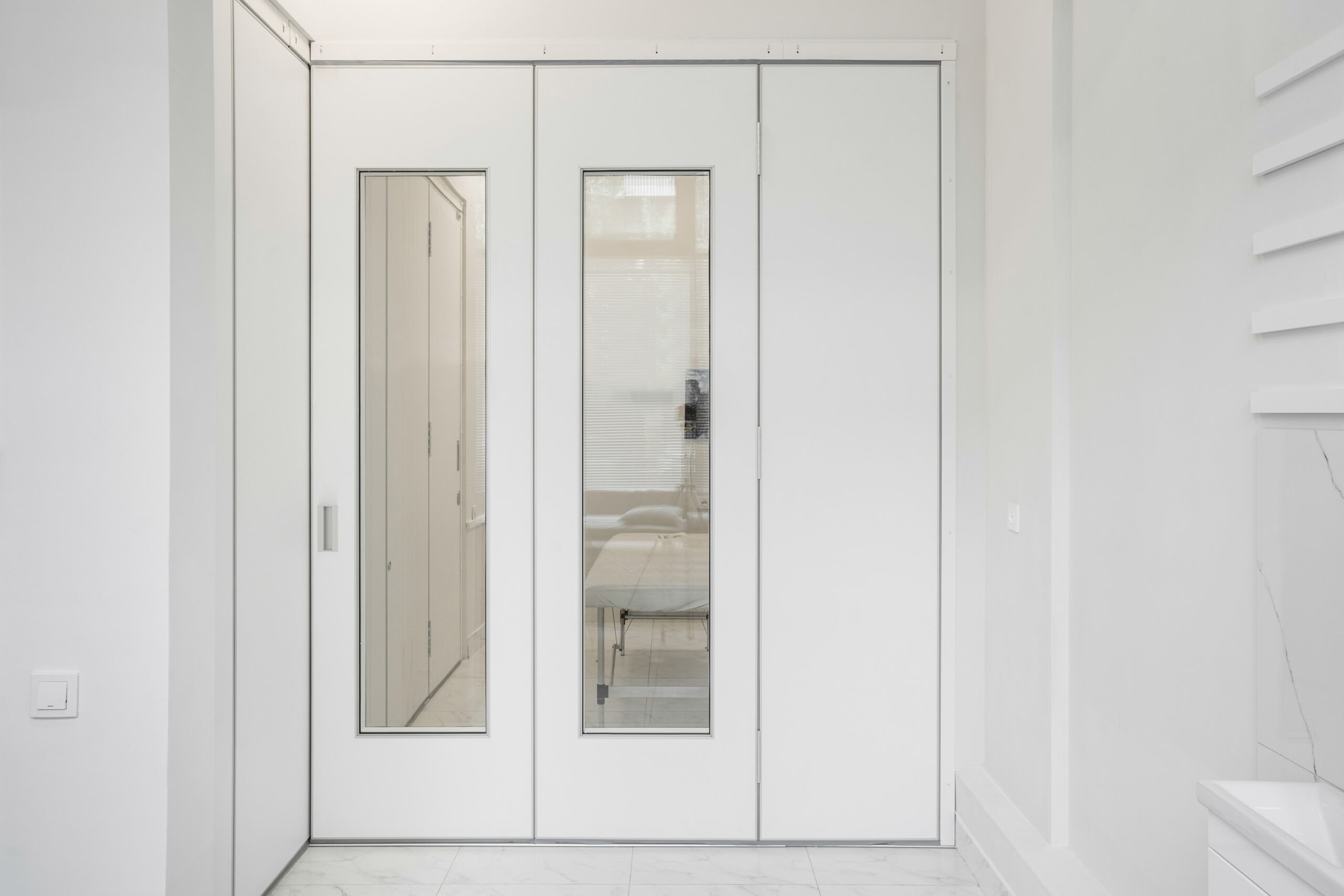
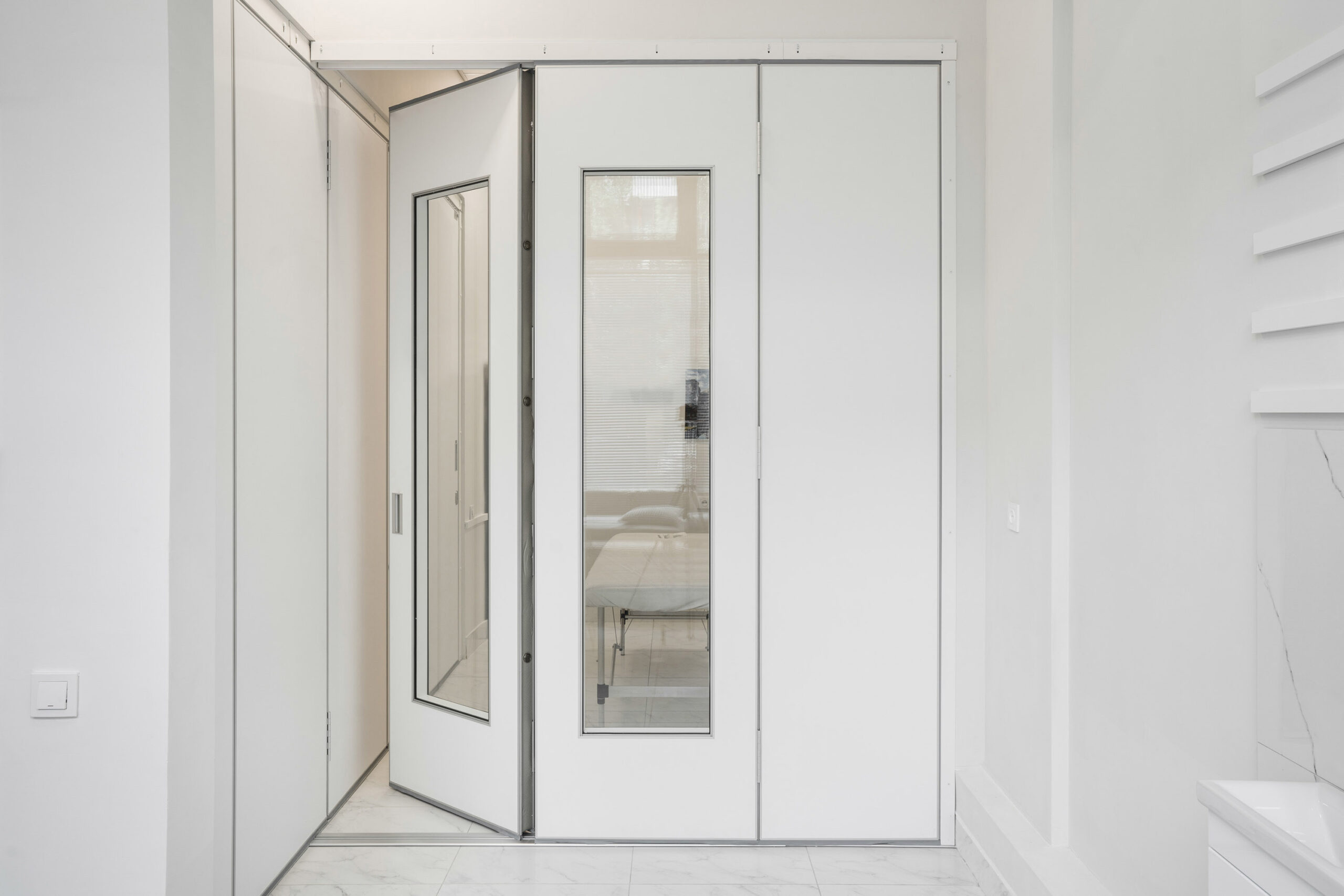
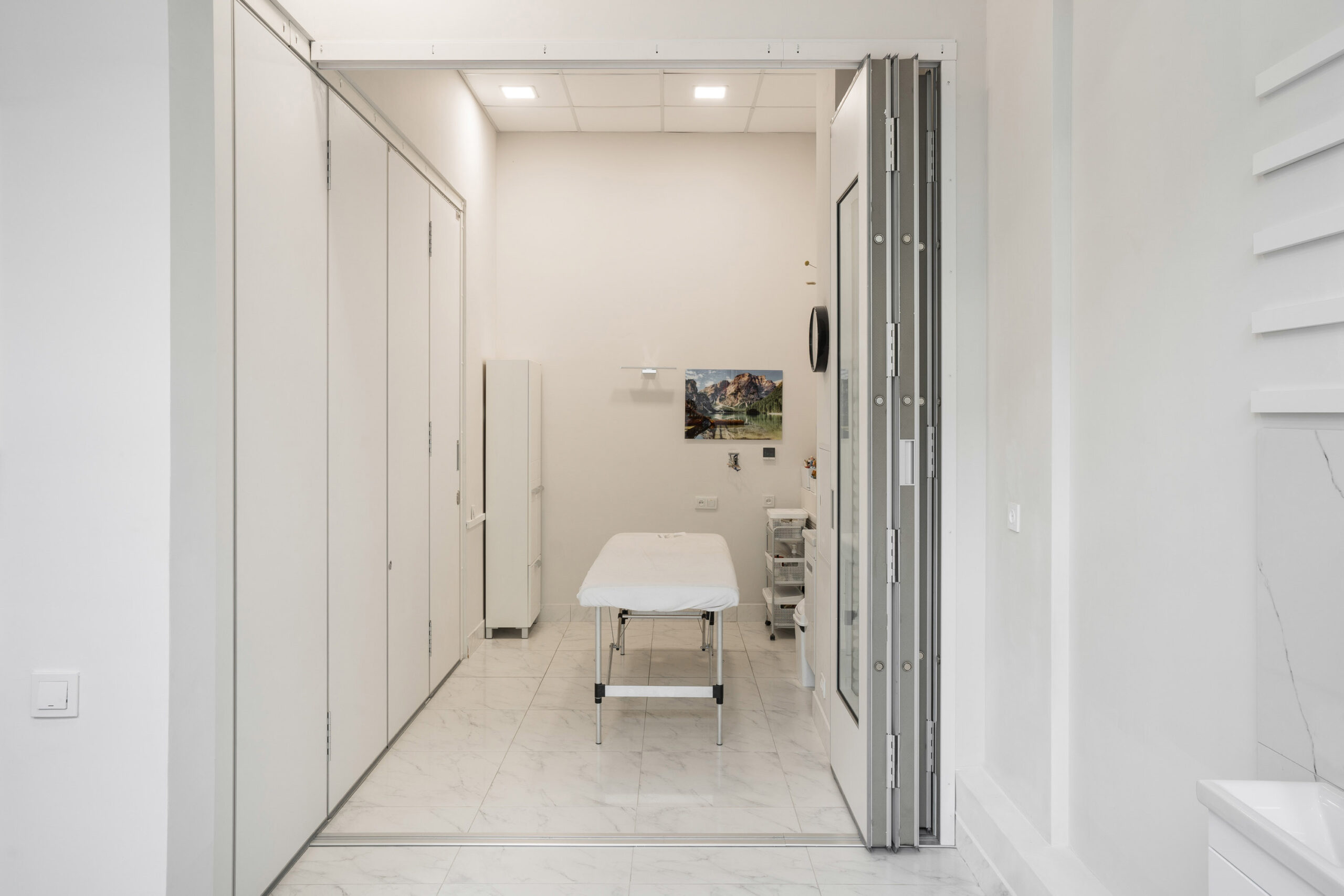
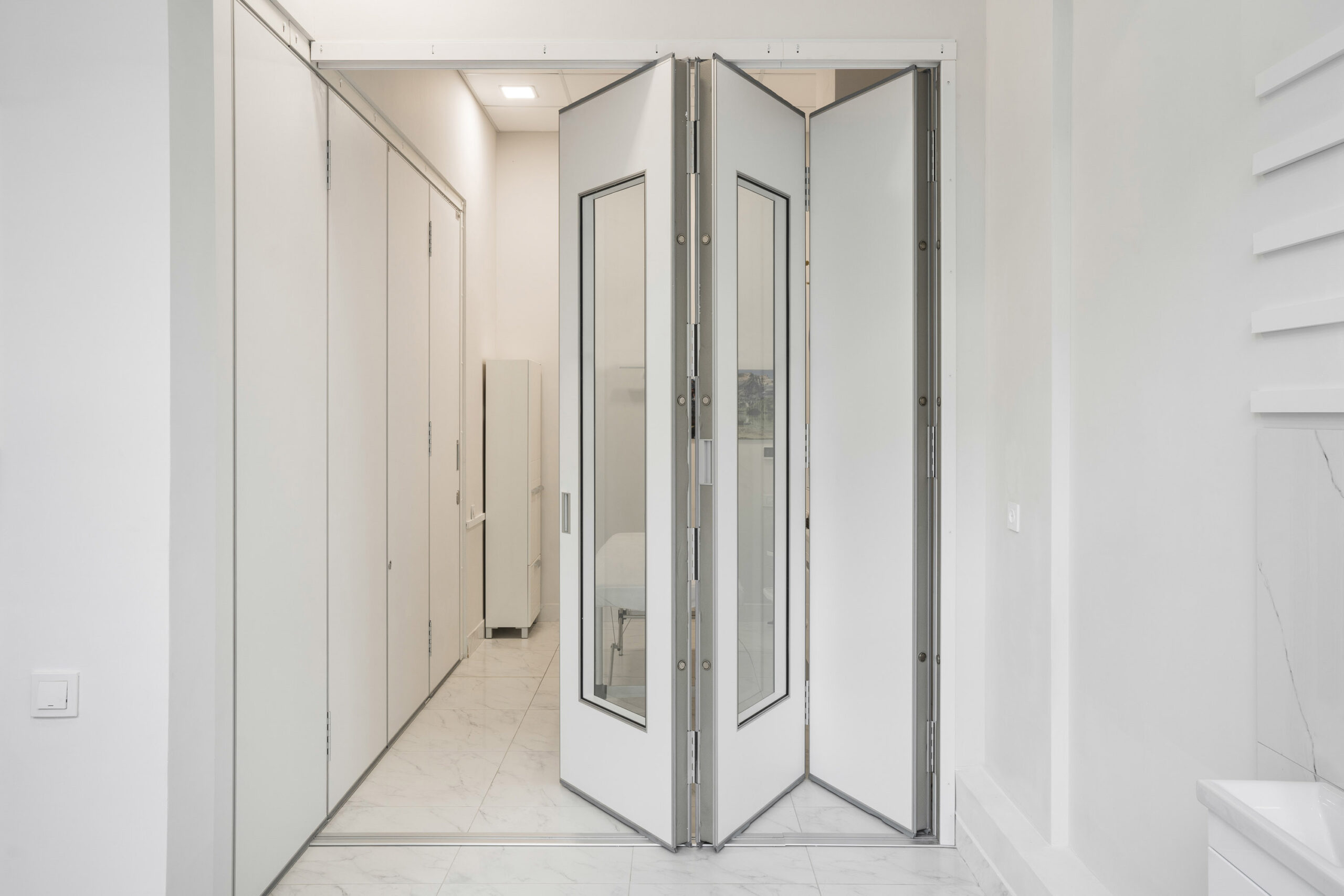
The choice of finishing materials for mobile systems in clinics differs critically from those used in office or residential spaces. Solutions are needed that ensure maximum sterility and durability under intensive operation.
Medical surfaces undergo regular treatment with aggressive disinfectants (based on chlorine, alcohol, quaternary ammonium compounds).
To minimize the risk of hospital-acquired (nosocomial) infections, materials with the function of inhibiting microorganism growth are preferred.
The partition design must prevent the accumulation of dust and moisture.
In a medical environment, transformable partitions solve critical problems related to confidentiality control and isolation.
For consultation rooms, psychiatry offices, and private discussions, the Weighted Sound Reduction Index () is paramount.
| Area of Application | Need for Adaptation | Technical Solution Aspect |
| Emergency Departments | Rapid creation of isolation boxes or expansion of waiting areas. | Use of semi-automatic or fully automatic systems, activated by a key or button, deploying in minimal time. |
| Intensive Care Wards (ICU) | Requirement for privacy and sound isolation for critically ill patients. | Partitions with high and a concealed track system that avoids floor obstructions for equipment and trolleys. |
| Medical Training Centers | Dividing a large lecture hall into smaller simulation rooms. | Application of systems with integrated technologies, such as magnetic or marker coatings on panels for educational use. |
| Consultation Rooms | Creating a soundproof, private area within an open clinic space. | Acoustic glass partitions with frosted film or switchable transparency (smart glass) to maintain natural light while ensuring confidentiality. |
In the 24/7 operating environment of medical facilities, durability and minimal technical maintenance become economically critical factors.
Transformable partitions are a key component of a flexible medical facility infrastructure. They ensure compliance with the strictest requirements for infection control and acoustic confidentiality while simultaneously guaranteeing the most efficient use of valuable floor space. Choosing high-tech systems that are resistant to chemical treatment and have a high sound insulation index is a direct investment in patient safety and the operational efficiency of the clinic.
Get weekly update about our product on your email, no spam guaranteed we promise ✌️
Our company offers the opportunity to get acquainted with the drawings of our products️️
Select download format