call me back
Have a project in mind? Fill out the form below and we`ll get back with you as soon as we have the chance
22/04/2026
The traditional Finnish commercial space, with its permanent, rigid walls, is becoming an obsolete asset. In an era defined by hybrid work models, soaring energy costs, and a demand for unparalleled flexibility, the most valuable square meter is a multifunctional one. For property owners and businesses across Finland, from the bustling office hubs of Helsinki to the municipal centres of Tampere and Oulu, the strategic implementation of sliding and folding partition walls is not merely a design choice—it is a direct driver of revenue, operational savings, and long-term asset value.
This article analyses the specific business advantages and cost structures of transformable spaces, moving beyond generalities to provide concrete financial insights for the Finnish context.
In the current Finnish commercial real estate market, adaptability is the new currency. The days of fixed leases for static spaces are fading, replaced by a demand for agility from tenants and a need for maximised utilisation from owners.
Modern Finnish companies are actively seeking offices that can evolve with their needs. A CBRE survey from late 2025 revealed a significant shift, with 29% of Nordic companies anticipating that half of their real estate portfolios will consist of flexible space by 2027. A property equipped with high-quality movable walls allows an owner to command a premium rental rate, effectively future-proofing the asset against market fluctuations.
The most profitable spaces are those that never sleep. A static meeting room may be used 10 hours a week, but a transformable space can generate income around the clock.
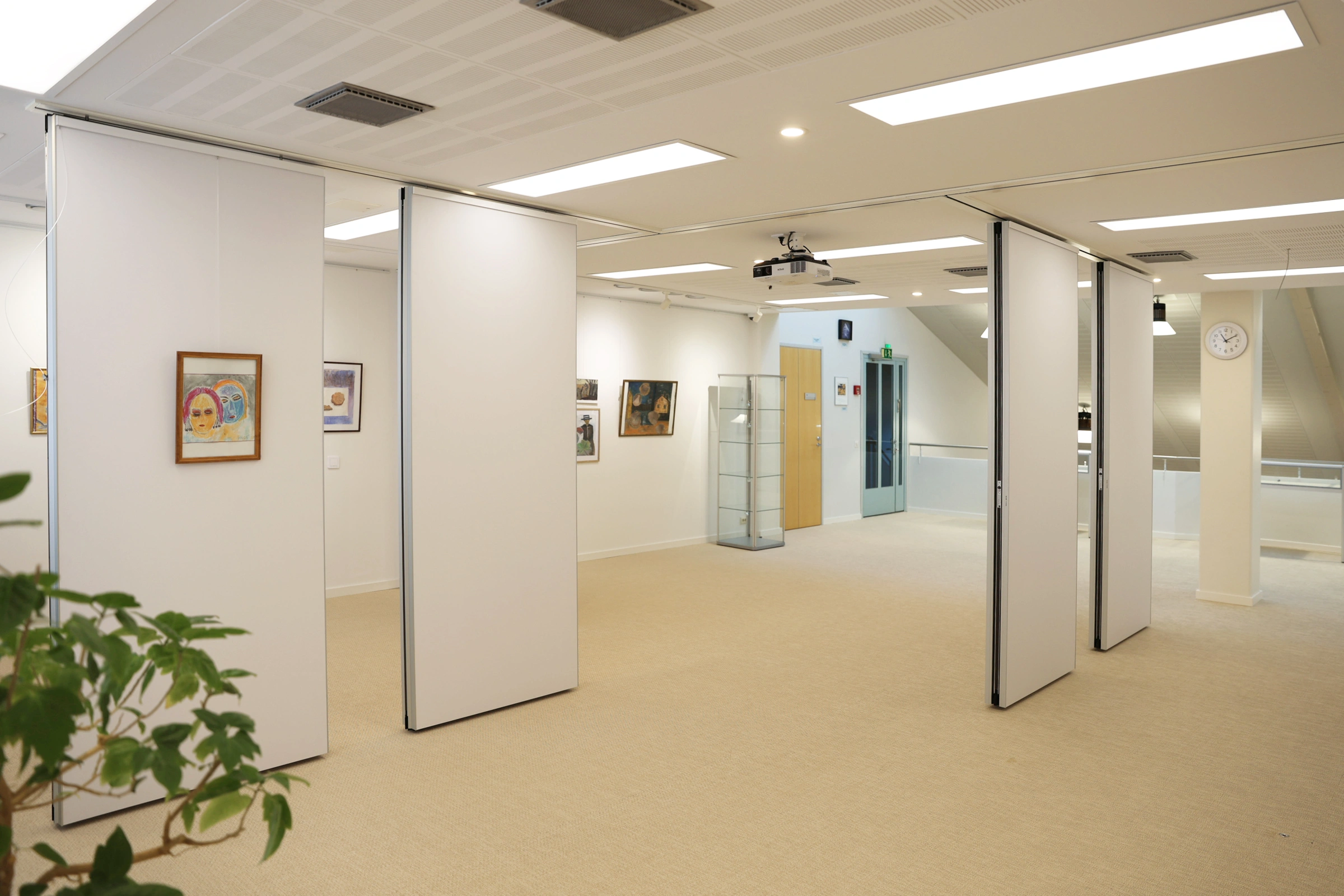
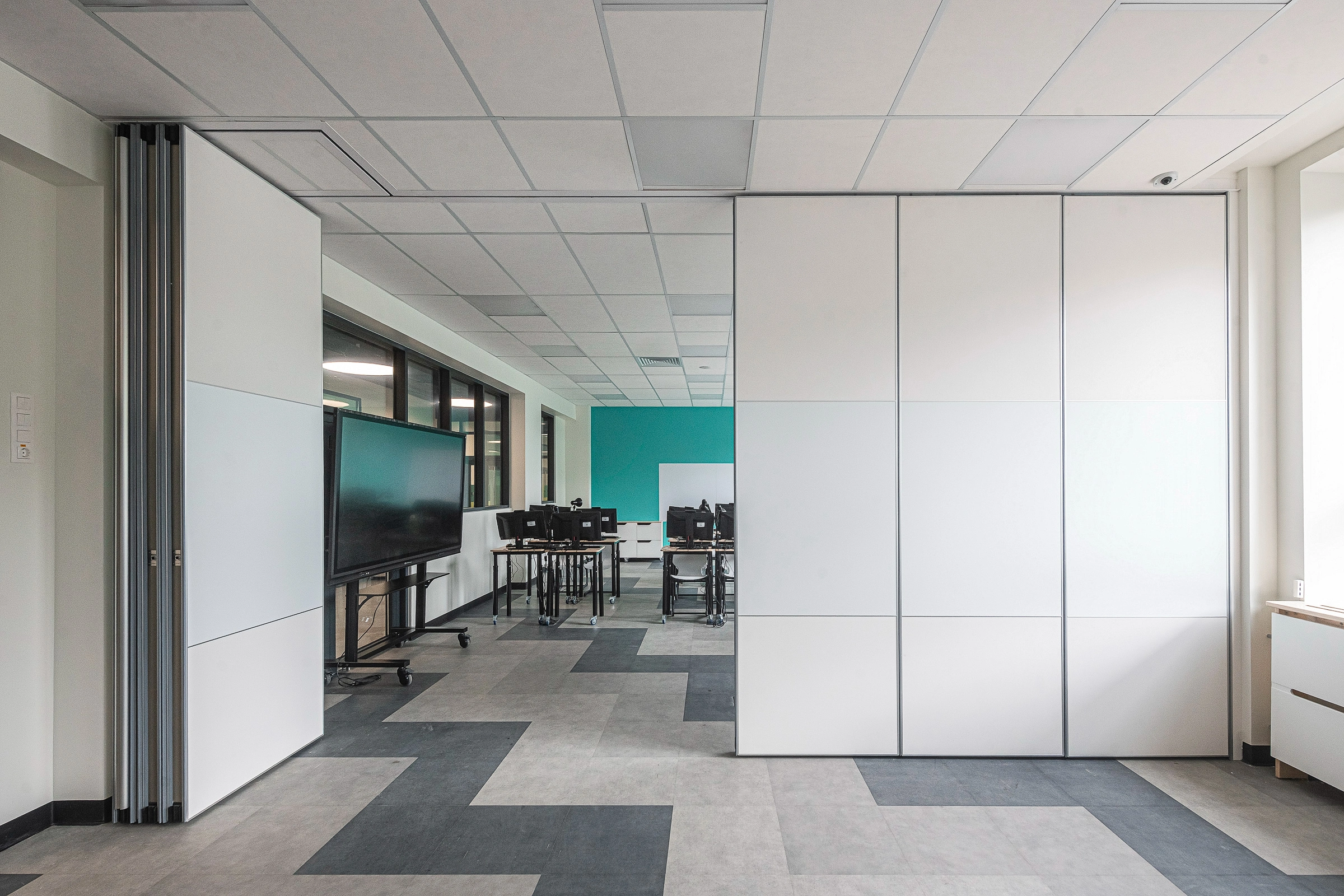
The initial price of a professional sliding wall system is undeniably higher than that of a standard drywall. However, focusing solely on the upfront cost ignores the far more significant long-term financial picture. For Finnish businesses, the lifecycle cost analysis tells a very different story.
– Traditional Walls: While the material costs are lower, the installation is labour-intensive, time-consuming, and disruptive, often taking weeks and generating significant dust and noise. This downtime has a tangible operational cost.
– Sliding/Folding Walls: The initial financial outlay is higher. For perspective, global market data suggests movable partition systems can range from approximately €255 to €500 per square meter. However, in Finland, innovative local companies like Scandicwall are proving this doesn’t have to be prohibitive, offering systems priced 15-30% below incumbents without compromising on quality. This higher upfront cost buys speed (installation in days, not weeks) and a “clean” process with zero structural disruption.
– Reconfiguration Costs: This is where the financial model flips. Reconfiguring a traditional wall requires full demolition (€200-500/m²), debris removal, and new construction (€800-1500/m²), effectively paying for a new wall every time.
– The Movable Advantage: A sliding or folding wall is a capital asset that is reconfigured in minutes at zero material cost. Finnish manufacturers like HSL Group specialise in these systems for offices, schools, and public buildings, emphasising “easy re-positioning” as a key element of their service. This ability to rearrange layouts on demand, without contractors or building permits, delivers profound long-term savings.
In many cases, movable walls can be classified as movable equipment rather than a fixed part of the building structure. This crucial distinction can allow businesses to benefit from accelerated depreciation schedules and other tax advantages, improving the immediate cash flow impact of the investment.
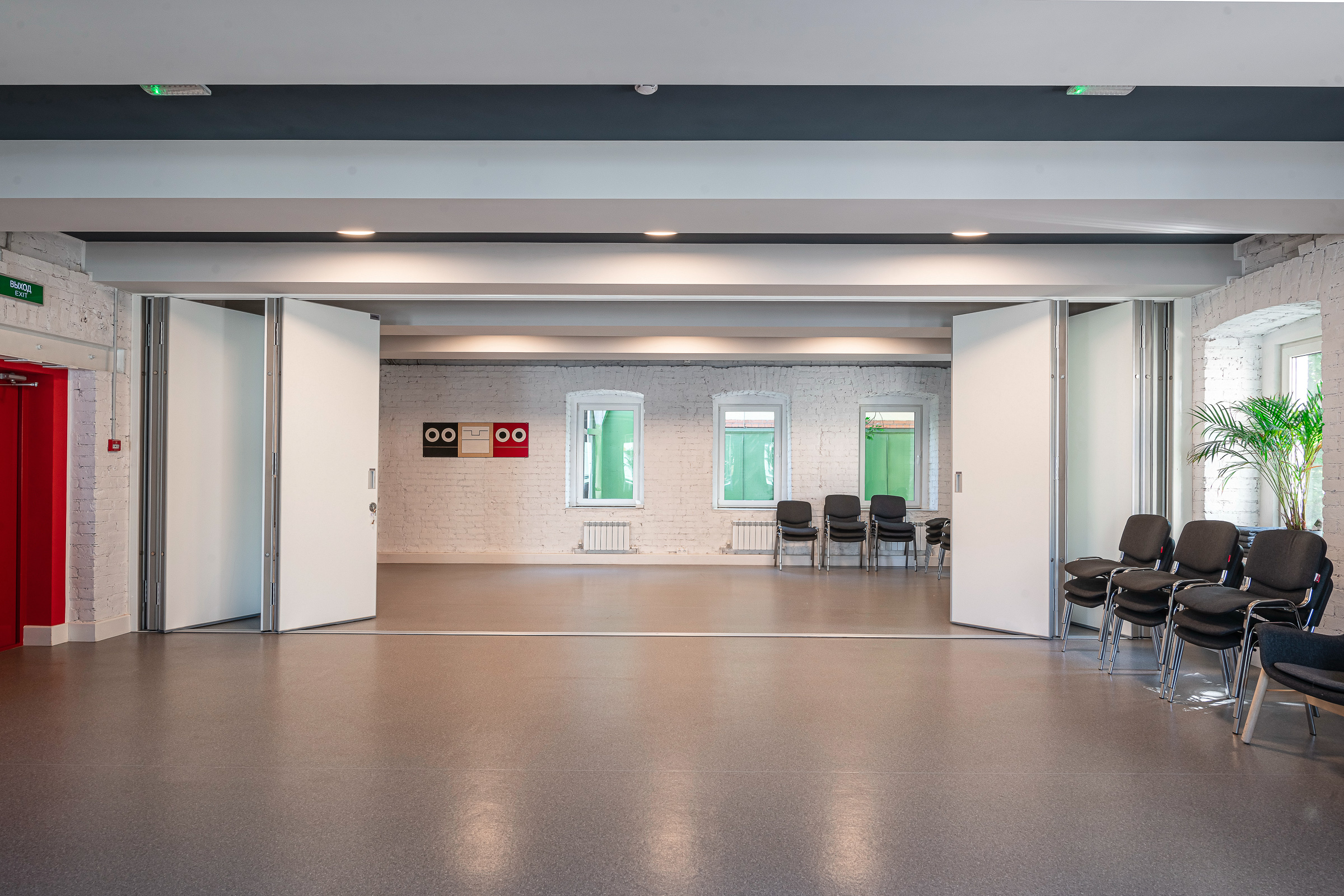
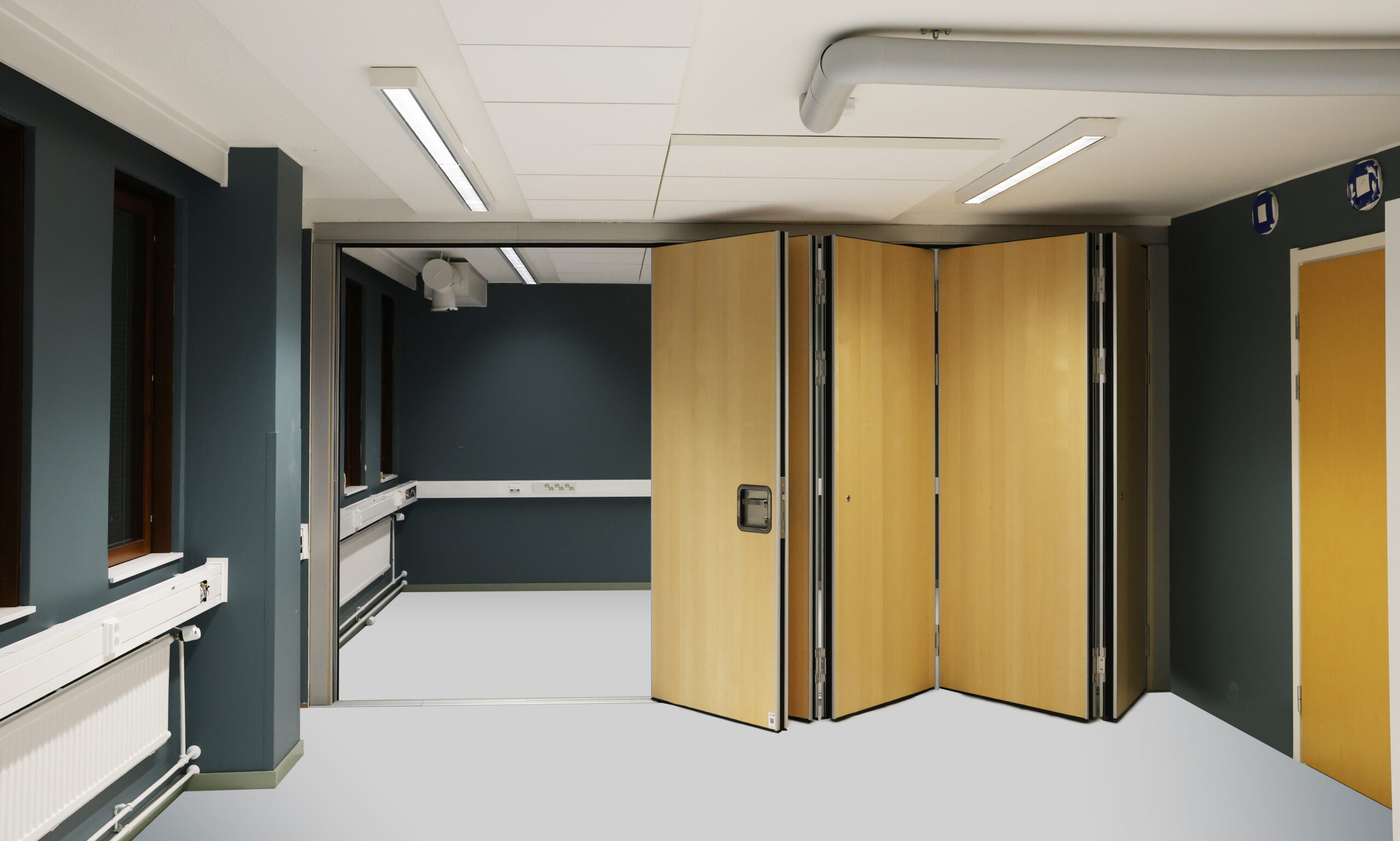
Finland’s long, cold winters and increasingly warm summers make energy efficiency a non-negotiable financial and regulatory concern. Movable walls offer a surprisingly effective tool for reducing HVAC costs.
The most direct energy saving comes from simply not conditioning empty space. A large open-plan office is expensive to heat. By closing a movable wall to isolate a smaller, occupied section, a company can drastically reduce its heating and cooling load. Combined building renovation steps have been shown to reduce heating energy consumption by 65% or more. Movable walls are a key enabler of this “on-demand” zonal conditioning.
Finnish building codes have stringent requirements for “noise abatement and noise conditions” and “energy efficiency”. Modern systems are designed to meet or exceed these standards. For instance, acoustic sliding walls can achieve Sound Transmission Class (STC) ratings of 32 to 53dB, and specific products in Finland, such as those from FP Products, have been tested to achieve sound insulation of up to 53 decibels.
The Finnish hardware giant K-Rauta tasked Scandicwall with creating a convertible space in one of its stores. A single large space can now be instantly divided into two separate areas using a movable wall with a certified acoustic performance of 48 dB. This not only provides acoustic comfort but also allows the store to heat only the section in use, generating direct energy savings. Furthermore, a pilot project in a Helsinki office building demonstrated that movable glass partition walls made from reused window glass had a carbon footprint approximately 50% lower than new equivalents, proving that flexibility and sustainability are financially and environmentally synergistic.
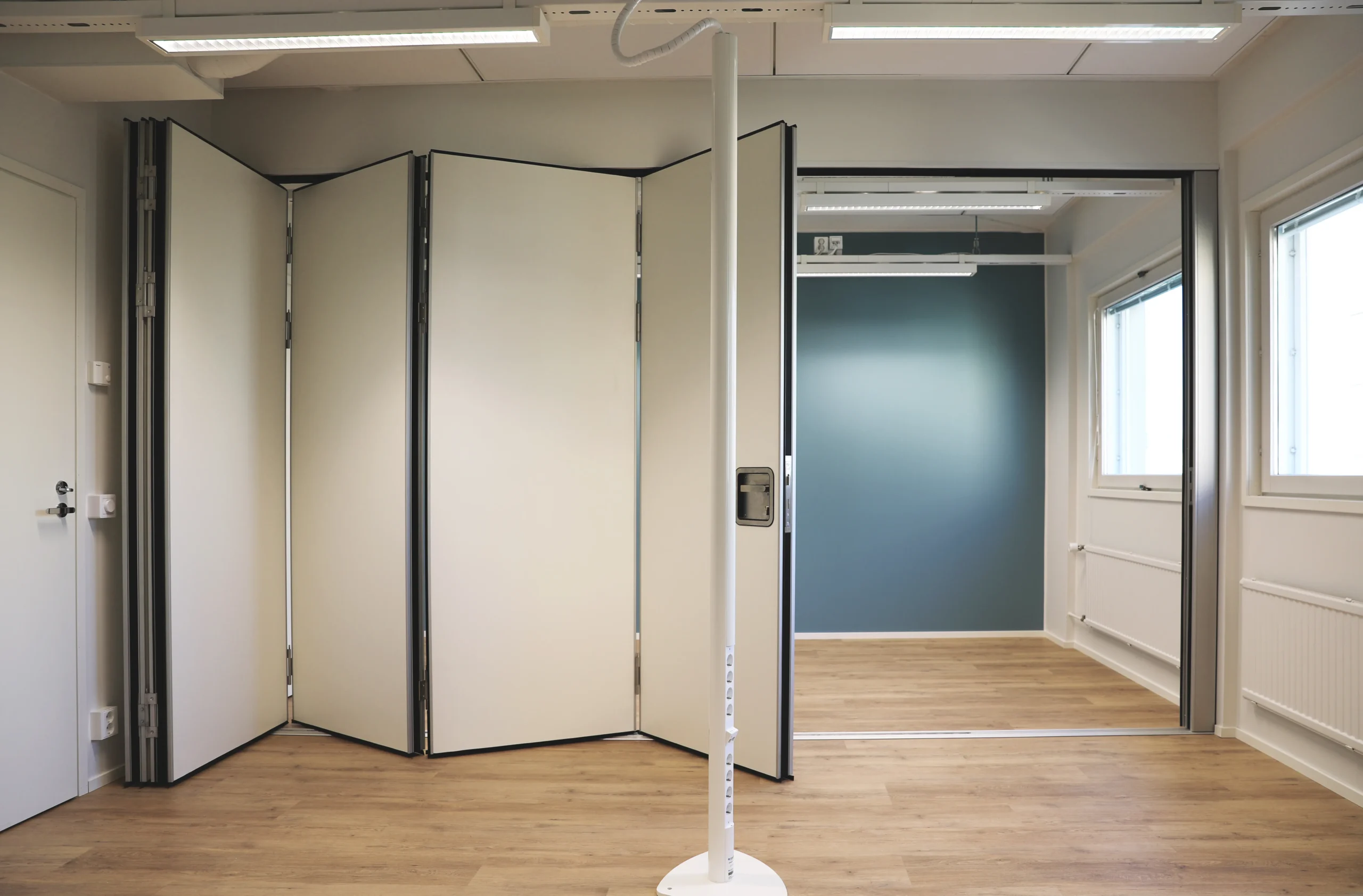
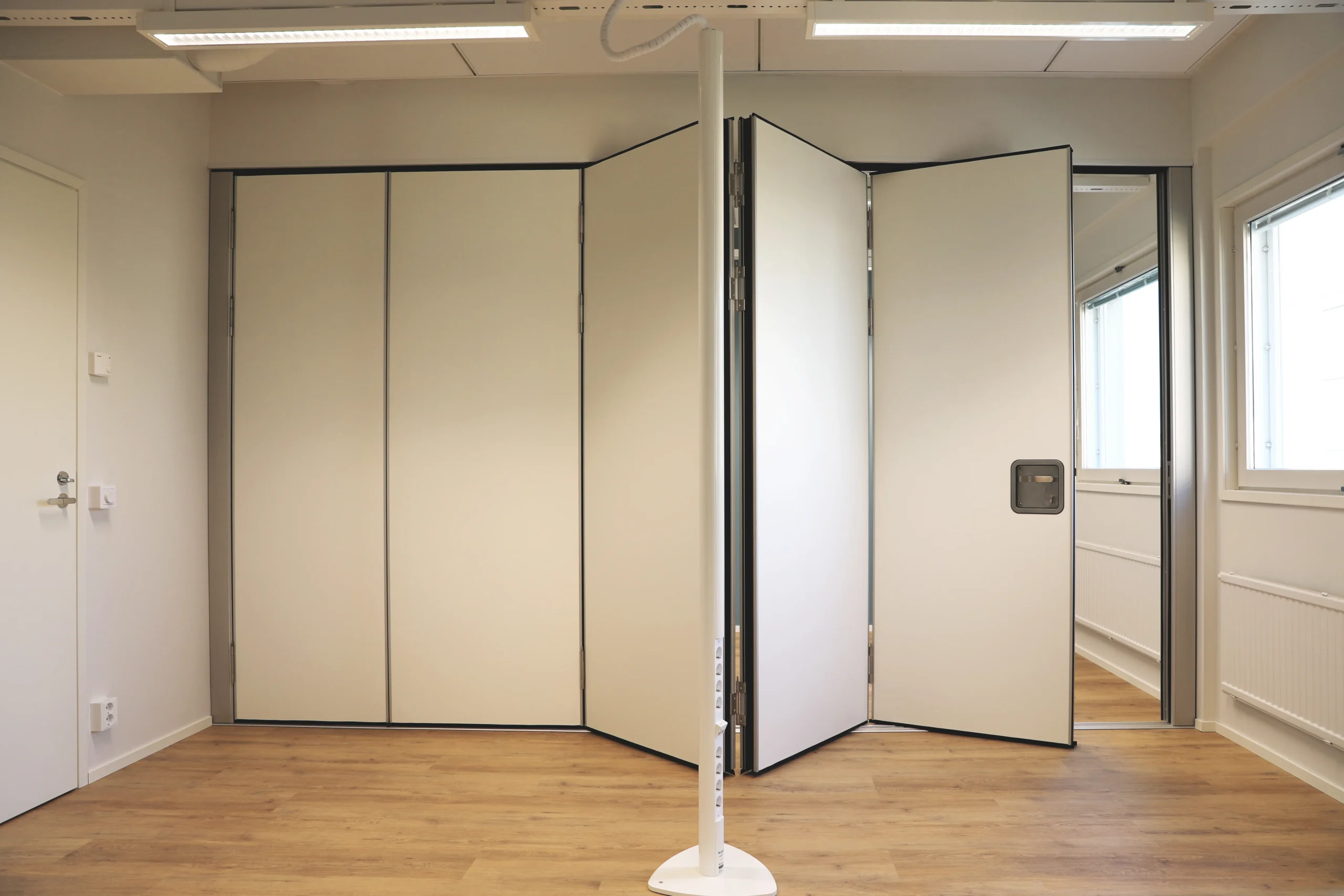
Investing in sliding and folding partition walls is a strategic decision that fundamentally changes the financial performance of a commercial space.
It transforms a static asset into a high-demand, flexible product, commanding premium rents and attracting quality tenants. The ability to offer “ready-to-adapt” spaces is a significant competitive advantage in the evolving Finnish market.
It provides the agility to downsize, expand, or reconfigure a layout overnight in response to changing team sizes, project needs, or market demands. This eliminates costly, disruptive renovations and maximises the utility of every leased square metre.
The long-term savings from operational efficiency (energy, maintenance, reconfiguration) and potential tax benefits mean that the higher initial investment is not a cost, but a capital improvement with a clear and calculable return.
In the Finnish business landscape, where sustainability, efficiency, and adaptability are paramount, the message is clear. The rigid walls of the past are a financial liability. The transformable spaces of the future are a strategic investment.
Get weekly update about our product on your email, no spam guaranteed we promise ✌️
Our company offers the opportunity to get acquainted with the drawings of our products️️
Select download format