call me back
Have a project in mind? Fill out the form below and we`ll get back with you as soon as we have the chance
20/09/2026
Coworking has fundamentally changed how people work. From Helsinki to Stockholm to London, shared workspaces have become the backbone of the modern economy, hosting freelancers, startups, remote employees, and entire corporate teams under one roof. The appeal is clear: flexibility, community, cost efficiency, and a professional environment without the overhead of traditional office leases.
But coworking spaces face a unique spatial paradox. They must simultaneously accommodate:
A static layout cannot serve all these needs. Permanent walls create underutilized rooms, while fully open plans sacrifice privacy and concentration. The solution lies in movable walls and partitions — systems that allow a coworking space to transform in minutes, not weeks.
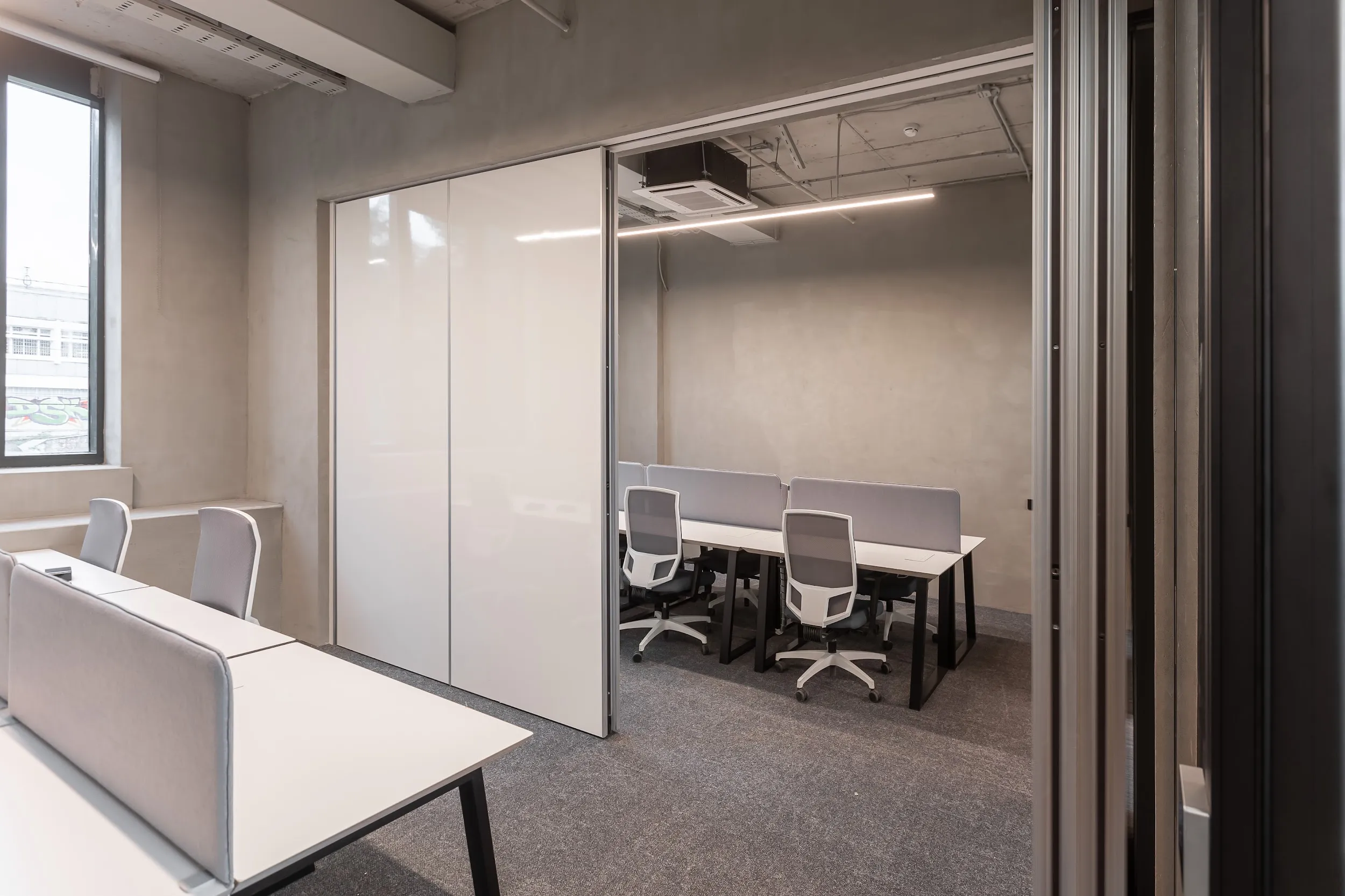
Coworking operators understand one thing better than anyone: space utilization is revenue. Every square meter that sits empty is a cost center. Movable walls directly address this challenge by allowing the same physical area to serve multiple functions throughout the day.
Key benefits for coworking operators:
For a deeper look at how sliding wall systems work in practice, explore our dedicated product page: Sliding Walls.
Not all movable walls are created equal. Coworking spaces have specific requirements that differ from traditional offices, schools, or hotels. Here’s how to match the right system to your space.
Sliding walls are the most common solution for coworking spaces because they offer the best balance of acoustic performance, ease of use, and spatial flexibility. Panels slide along ceiling-mounted tracks, allowing a large open area to be divided into separate rooms in under a minute.
Key specifications for coworking applications:
For spaces that need to balance openness with privacy, sliding walls with glass panels are particularly effective — members can see that a room is occupied without hearing what’s being discussed inside.
Folding partitions use a concertina-style mechanism where panels fold back against a wall when not in use. They’re ideal for coworking spaces with limited storage space or where a lighter, more mobile solution is preferred.
Key specifications:
Folding partitions work well for dividing lounge areas from work zones, creating temporary meeting corners, or separating a café area from the main coworking floor. Learn more on our Folding Partitions page.
For areas within a coworking space that need a more permanent division — such as a reception area, a dedicated team room, or a phone booth zone — glass office walls provide a fixed but transparent solution.
Key specifications:
Glass walls maintain the open, light-filled aesthetic that coworking members love while providing reliable acoustic separation. They’re ideal for creating a permanent “quiet zone” or a professional meeting room that doesn’t feel enclosed. See our Office Glass Walls range for details.
Acoustics are the single most important factor in coworking satisfaction. A 2025 survey of coworking members across the Nordics found that noise and lack of privacy were the top two complaints, ahead of temperature, lighting, and furniture quality.
Here’s how to address acoustics with movable walls:
| Zone | Recommended System | Target Rw |
| Phone booths / Focus pods | Glass office walls | Rw 32–40 |
| Small meeting rooms (2–4 people) | Folding partitions | Rw 41–44 |
| Medium meeting rooms (4–8 people) | Sliding walls | Rw 44–50 |
| Conference / Presentation rooms | Sliding walls (high-performance) | Rw 50–58 |
| Event / Community areas | Open or lightweight partitions | Rw 30–38 |
The goal is not to make every space equally quiet, but to create a gradient of acoustic environments — from lively community areas to silent focus zones — so members can choose the environment that suits their task.
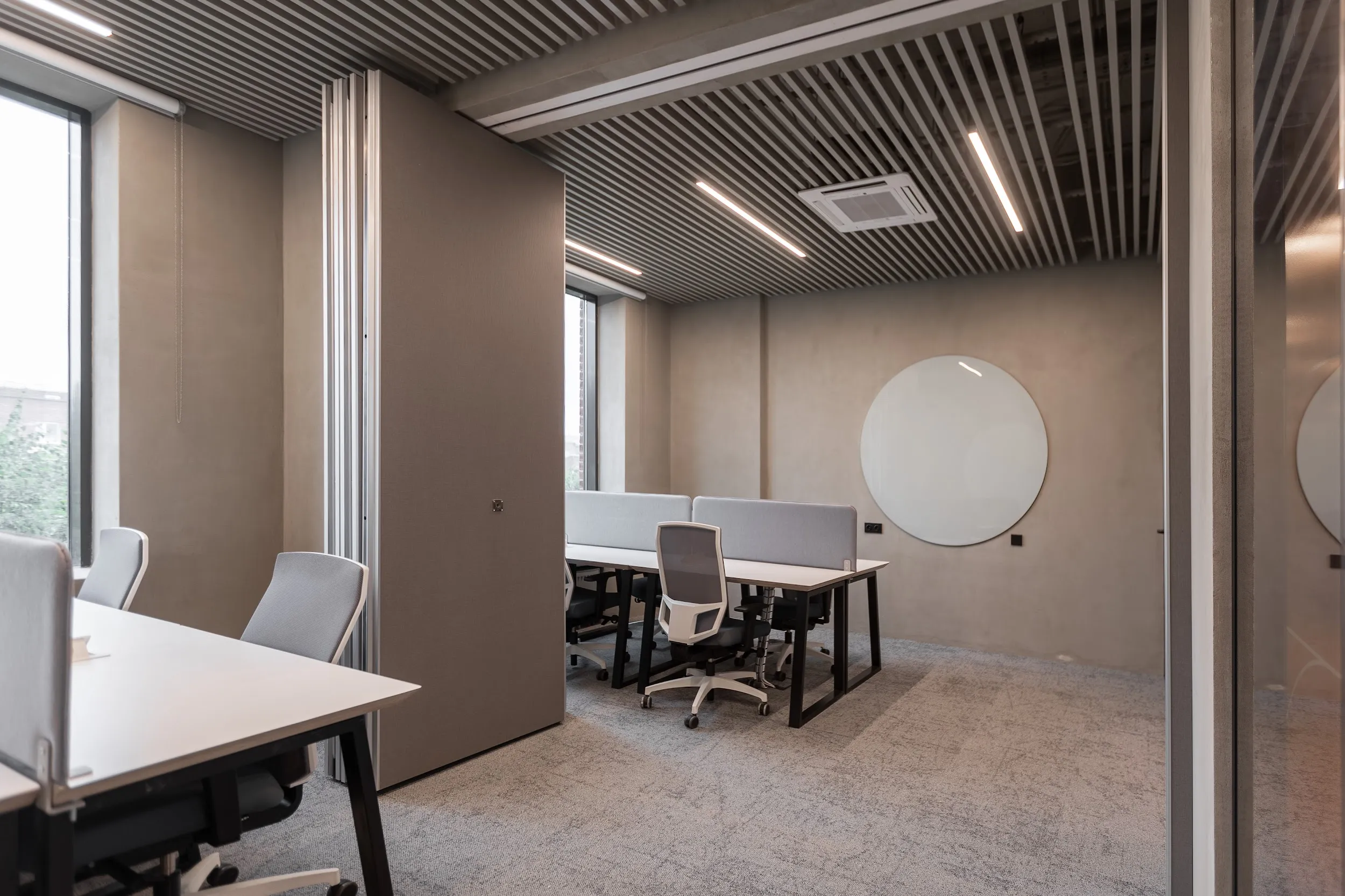
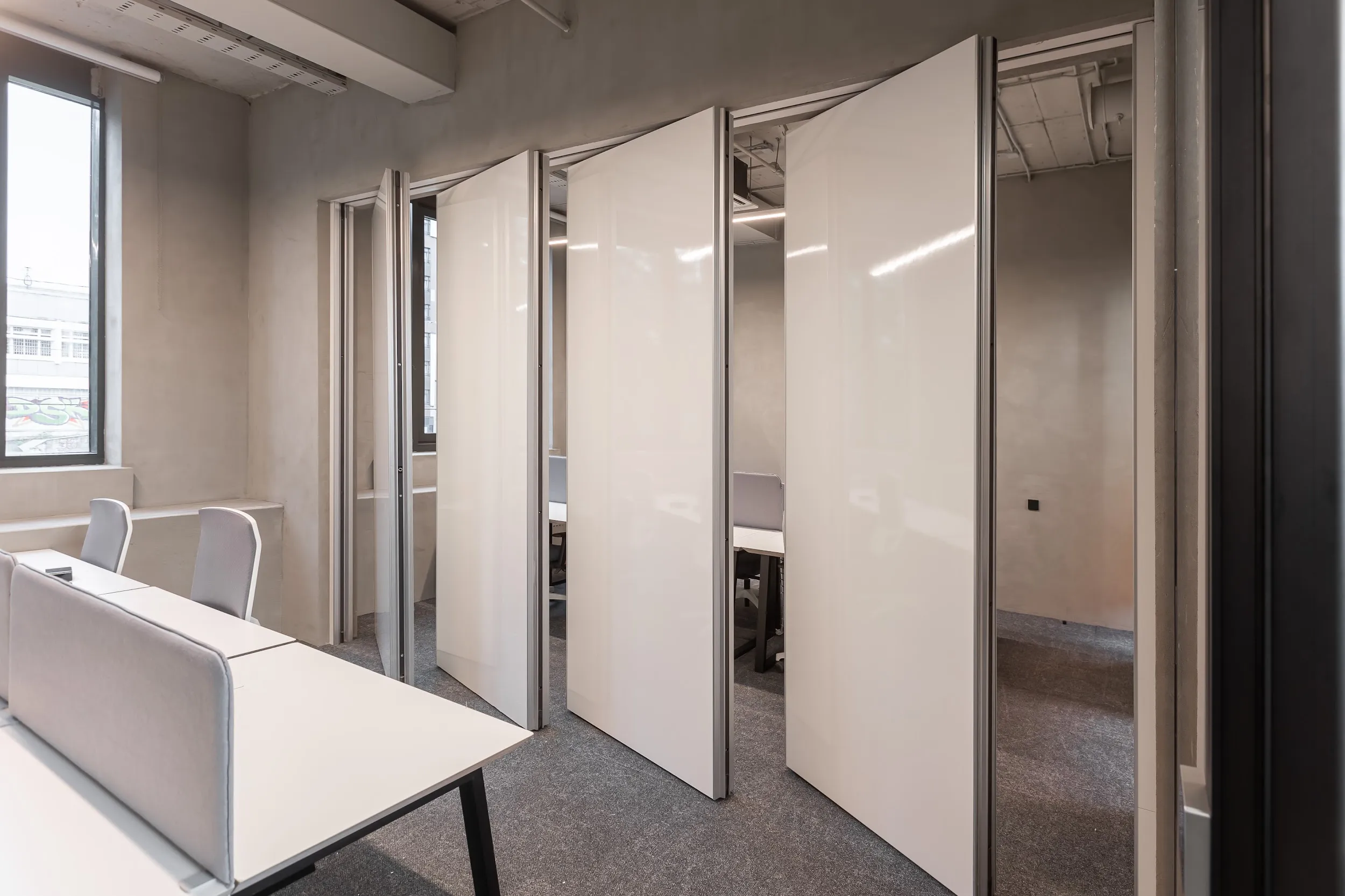
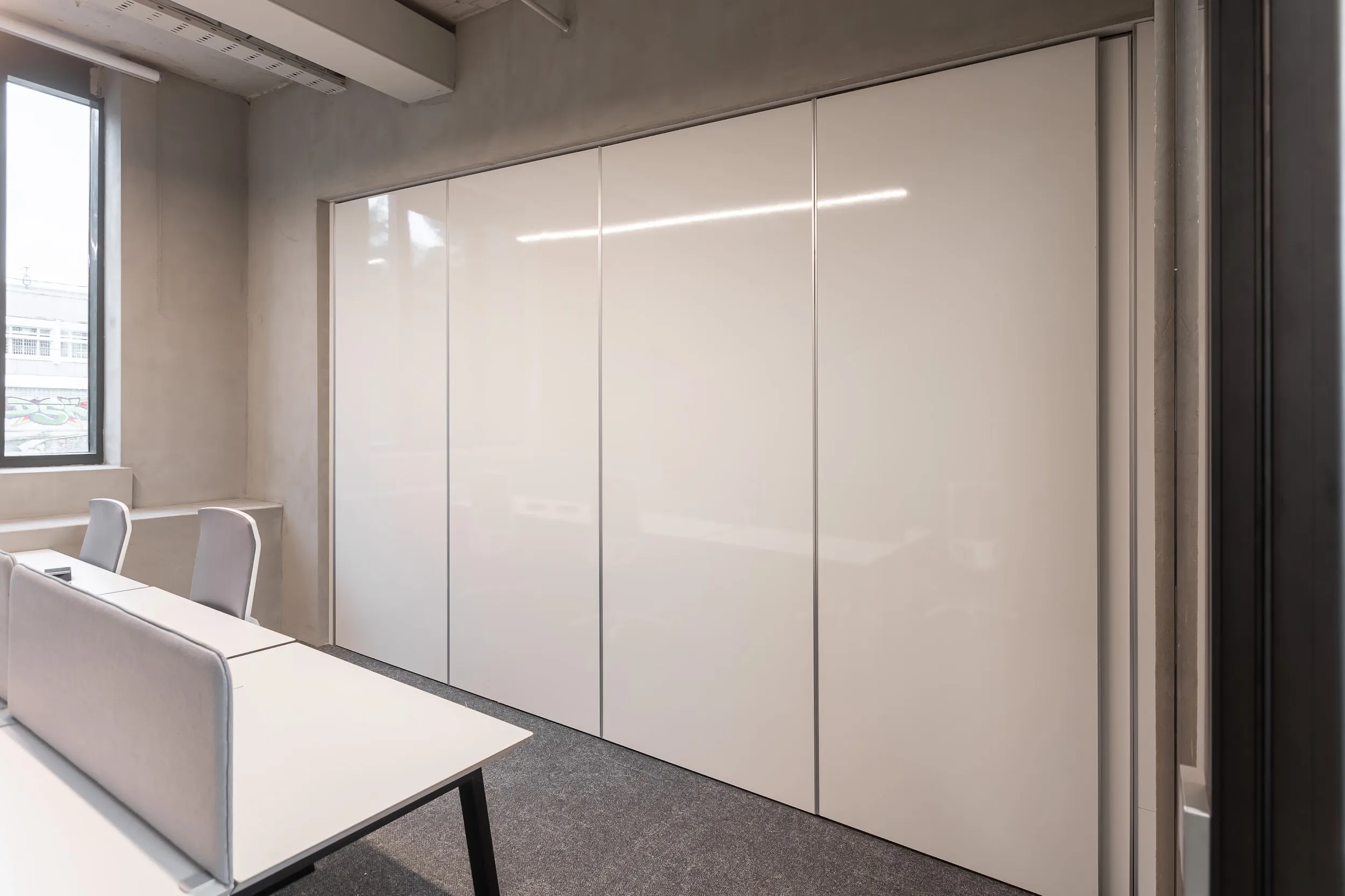
The most convincing argument for movable walls in coworking is a real installation. In a ScandicWall project completed in 2024 for Coworking parta, two sliding walls were installed to solve the classic flexibility dilemma described above.
The challenge: The coworking space needed to serve both individual members and large corporate teams. A static layout could not adapt to changing occupancy levels, and the open plan offered no way to create private zones when needed.
The solution: Two sliding walls were installed on ceiling-mounted tracks, allowing the space to be zoned depending on how full the offices were. The panels were finished with a magnetic marking coating — transforming the walls into functional bulletin boards where members can attach important information, write down notes and theses, or even project multimedia materials directly onto the surface.
The outcome: The operator gained a space that genuinely adapts to its members instead of forcing members to adapt to the space — with better zoning, higher utilization, and an added layer of utility through the magnetic marker coating.
The full case — with photos, technical specifications, and project details — is available in our portfolio: Sliding walls for coworking.
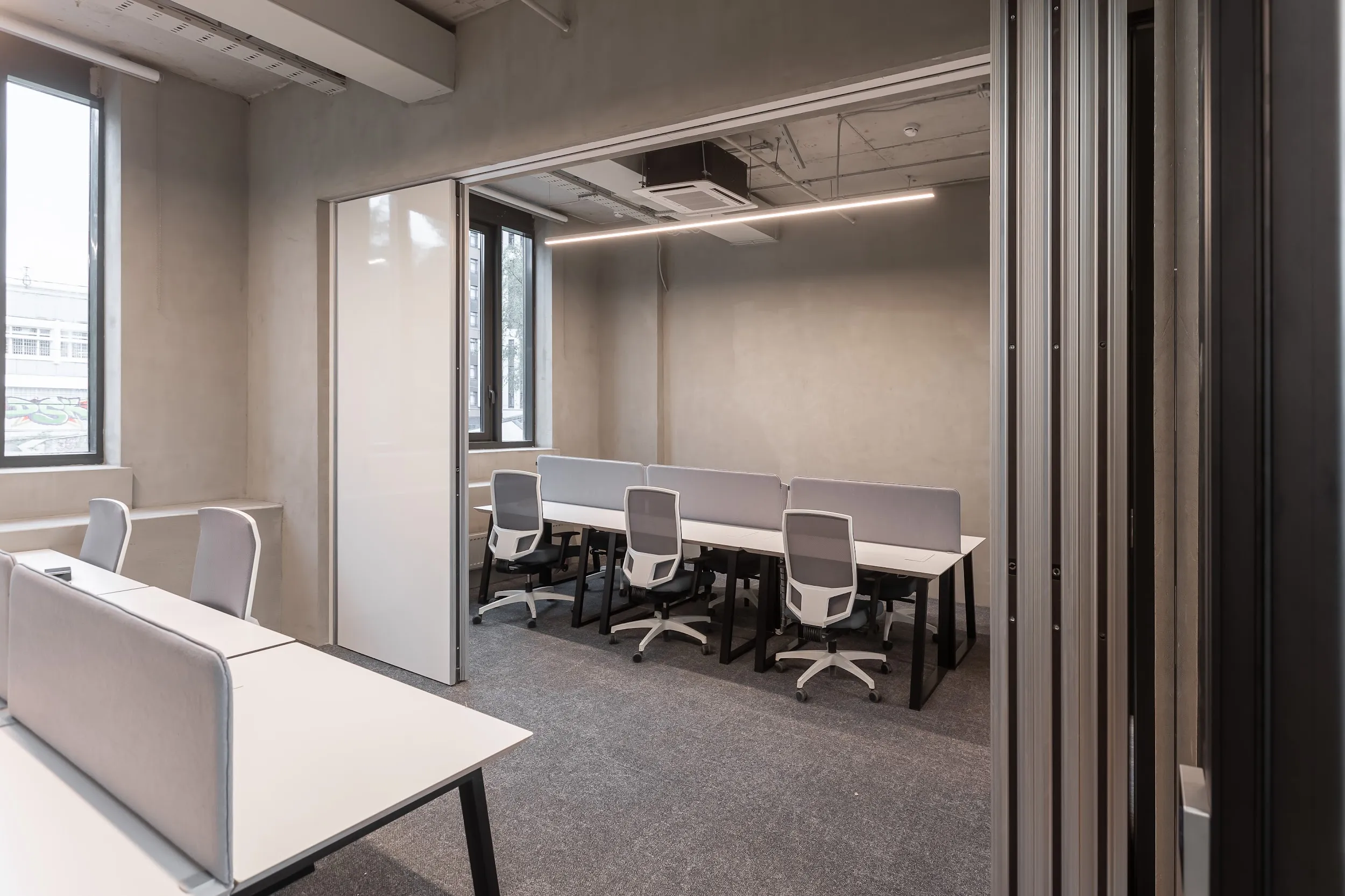
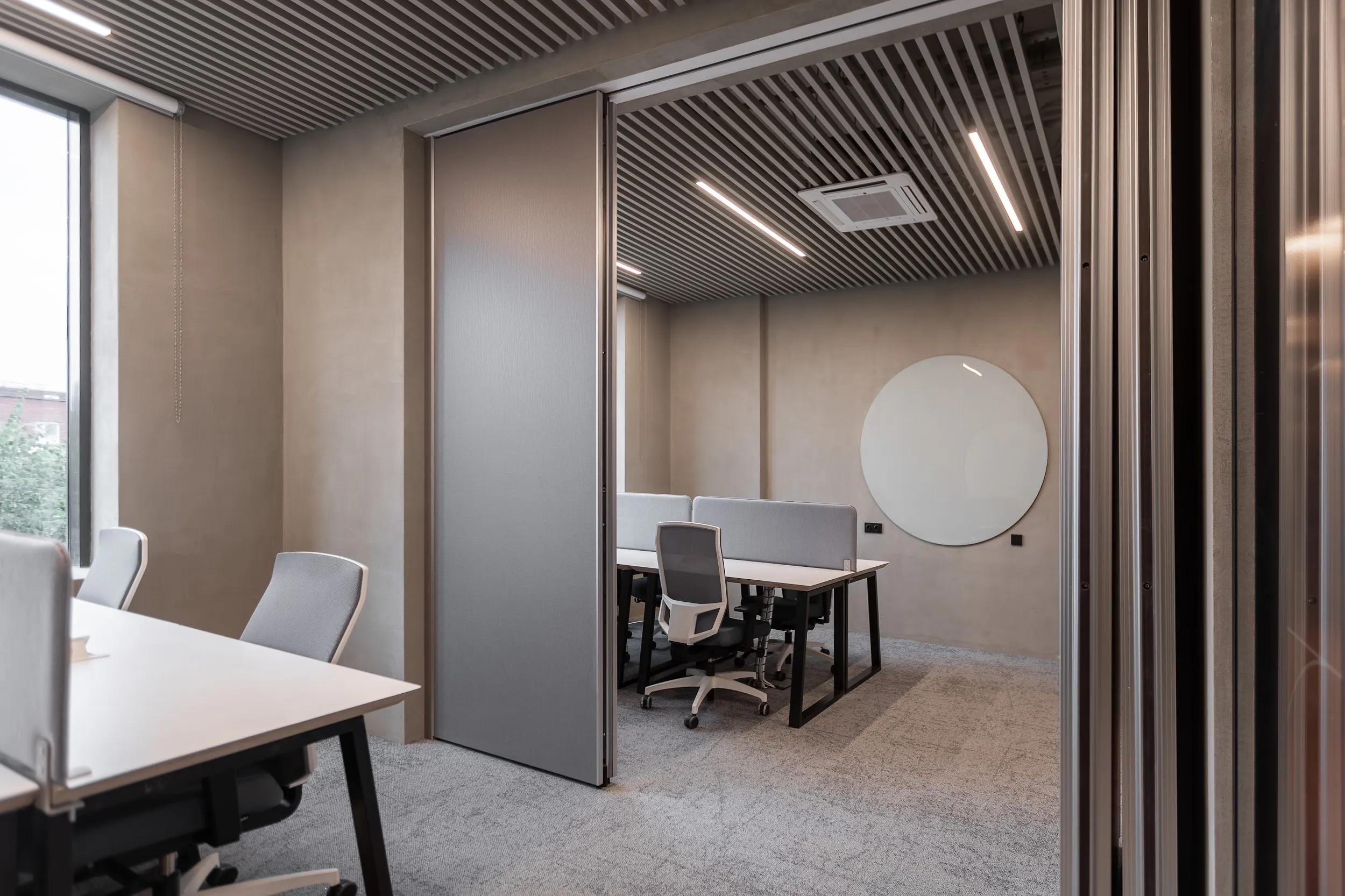
Movable walls in coworking spaces must do more than function — they must fit the aesthetic. Coworking members expect a space that looks professional, modern, and welcoming. Key design considerations include:
Movable walls are not just a design choice — they are a financial investment. For coworking operators, the ROI is straightforward:
A 2026 report on Nordic flexible workspaces found that coworking spaces equipped with movable walls achieved 15–25% higher revenue per square meter than comparable static spaces. The initial investment in a quality movable wall system typically pays for itself within 18–24 months.
Coworking spaces are defined by flexibility — in membership, in working styles, and in the communities they serve. The physical space must reflect that flexibility. Movable walls and partitions give coworking operators the tools to create spaces that adapt in real time, serving individual focus work, team collaboration, and community events without compromise.
Whether you need the acoustic performance of Sliding Walls, the compact efficiency of Folding Partitions, or the permanent transparency of Office Glass Walls, ScandicWall has a system designed for the unique demands of shared workspaces.
The future of coworking is not fixed. It moves.
Get weekly update about our product on your email, no spam guaranteed we promise ✌️
Our company offers the opportunity to get acquainted with the drawings of our products️️
Select download format